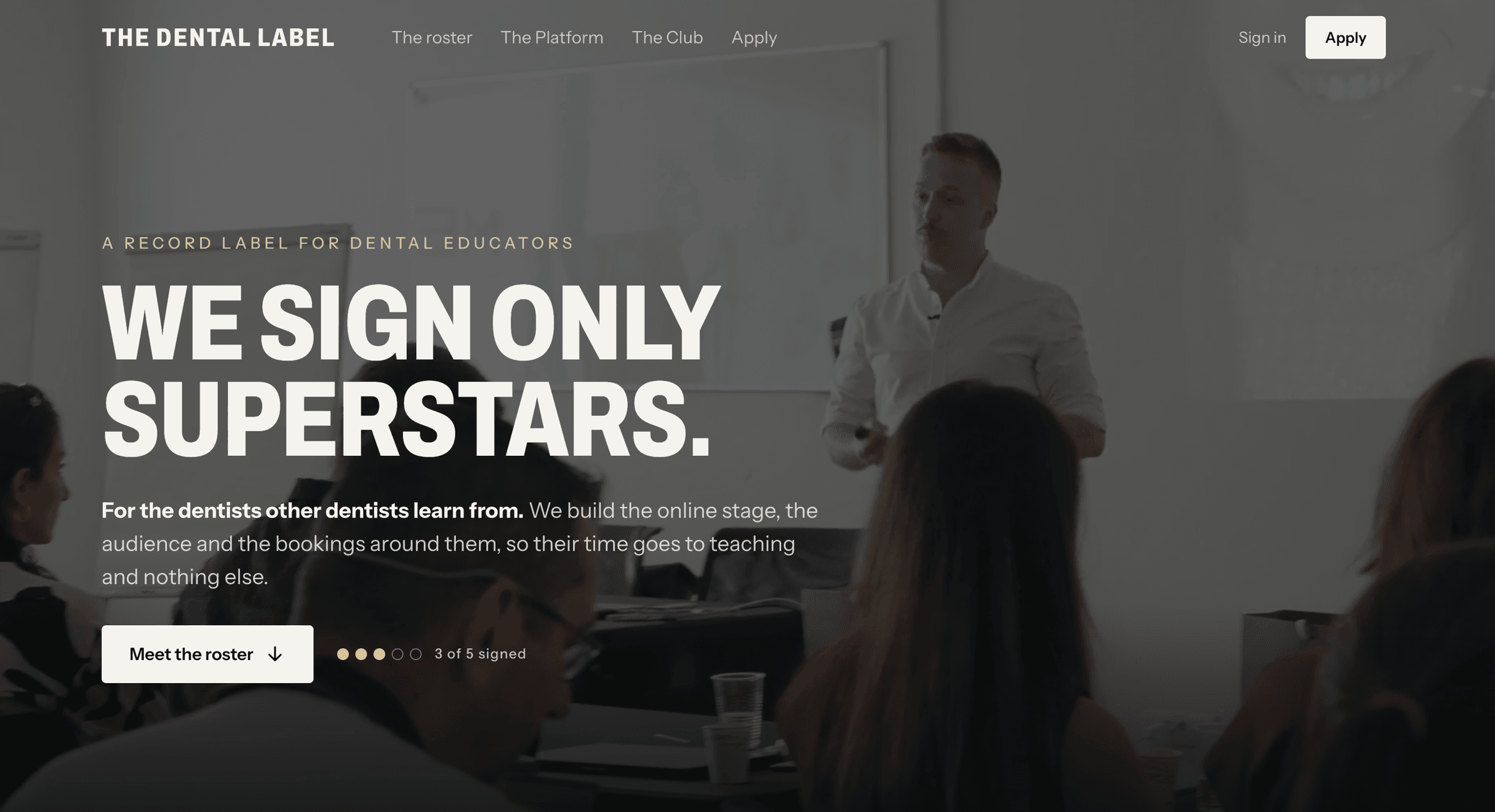
Last week, I told a friend that The Dental Label, the startup I co-founded this summer, was the pinnacle of my 12 years online - strategy, branding, user experience, client retention and launches all rolled into one project and platform.
I felt weird hearing myself say it out loud and part of me wanted to walk it back, make it sound less grand.
I'm glad I didn't, because, we'd rethought how people go through programs, how our create and structure them with AI, and everything that happens in between.
And somewhere along the way, we'd built the kind of client experience I'd wanted to see for years in well known platform we've been using.
And while we haven't launched our platform publicly, the first cohorts are sold, and the students are getting inside.
So let me show you what we've built, and why.
1/ It started with a few things that kept bothering me
Before we built anything, I spent a month thinking about the people who actually go through these programs. Not the ideal student who watches every video and implements everything on schedule.
The real "life happens" people.
The dentist who finishes a long day with patients and finally gets time to study at ten in the evening.
The person who remembers a question in the middle of something else and wants an answer now, not three days later.
The student who knows they heard you explain something a few weeks ago and has absolutely no intention of watching a 60-minute recording to find it.
And the expert on the other side, trying to run a business, serve clients, create new material, and somehow remember which student needed what.
Looking at both sides, I ended up with eight simple rules.
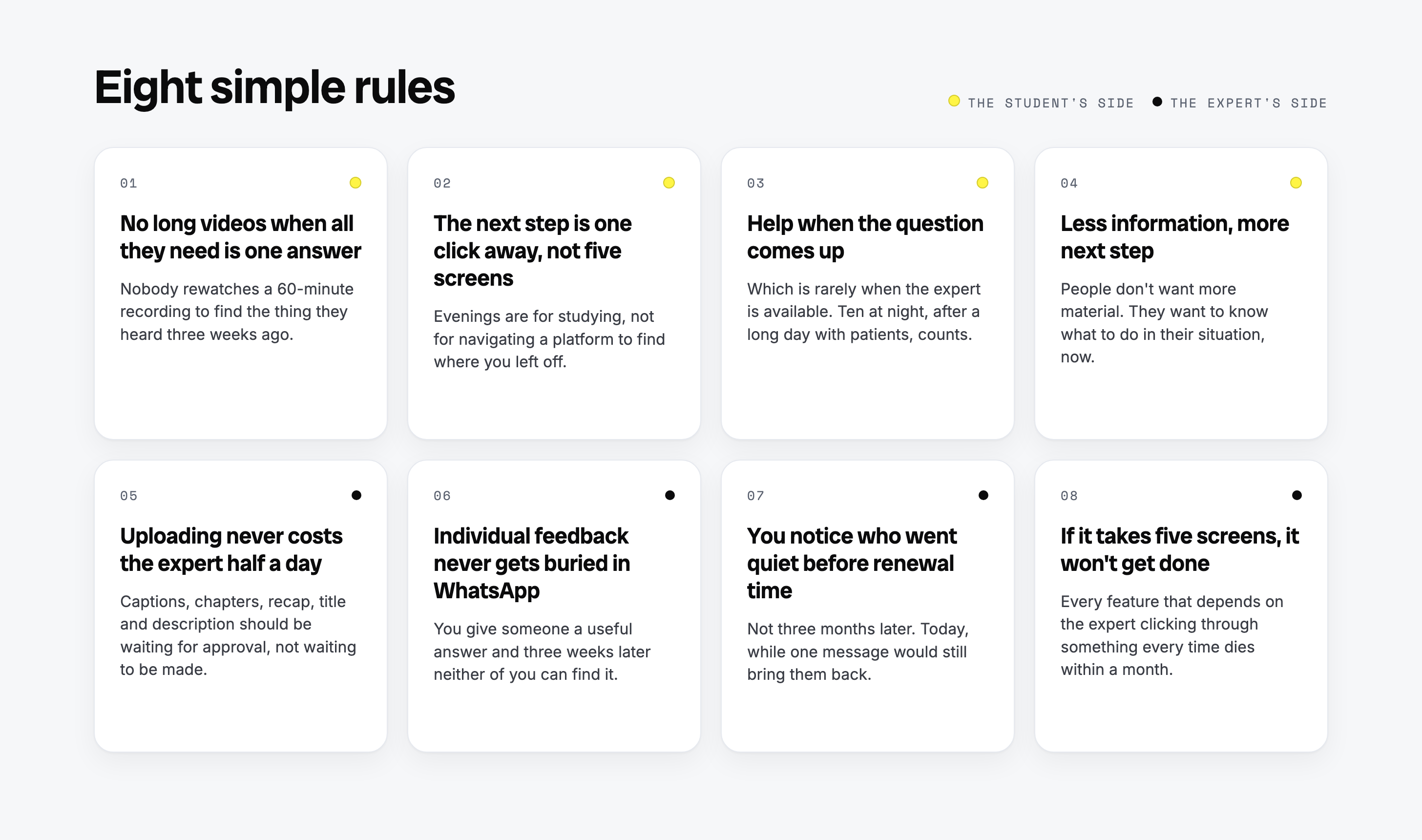
Nothing particularly groundbreaking on its own. But I wanted every part of the platform to exist for a reason, rather than adding features just because we could.
2/ Why build your own platform when there are already so many?
We have Kajabi, Circle, Teachable and plenty of others that do a good job of helping people sell and deliver programs. So why build another one?
The short answer: the way we wanted to deliver the experience and use AI didn't fit the platforms we had.
The bigger platforms spent years building their foundations. Thousands of customers, existing systems, a lot that can't be ripped out when a new idea comes along.
So when the way people behave changes, they adapt what exists without a RESET button. That's why AI arrives there as an add-on, sometimes useful, often bolted onto an experience that wasn't designed around it.
A year or two ago, building your own platform sounded ridiculous without a serious engineering budget. Today the economics are different enough that established businesses should at least consider the question.
To be clear: if you have a handful of high-touch clients and your setup works, keep it. But if you run an established business doing mid-six or seven figures a year, with a proven method and a growing number of clients, swap the question. Instead of "which platform should I use?", ask:
"What would the ideal experience for my clients actually look like?"
You might find a small tool solves it. Or that your platform is fine. Or that the experience you want is now possible, even if nothing off the shelf delivers it.
3/ Let me show you what we've built
The Dental Label is three platforms in one: for students, for experts, and for us to run the whole business.
Today you get the student side and my private clients get the full walkthrough soon.
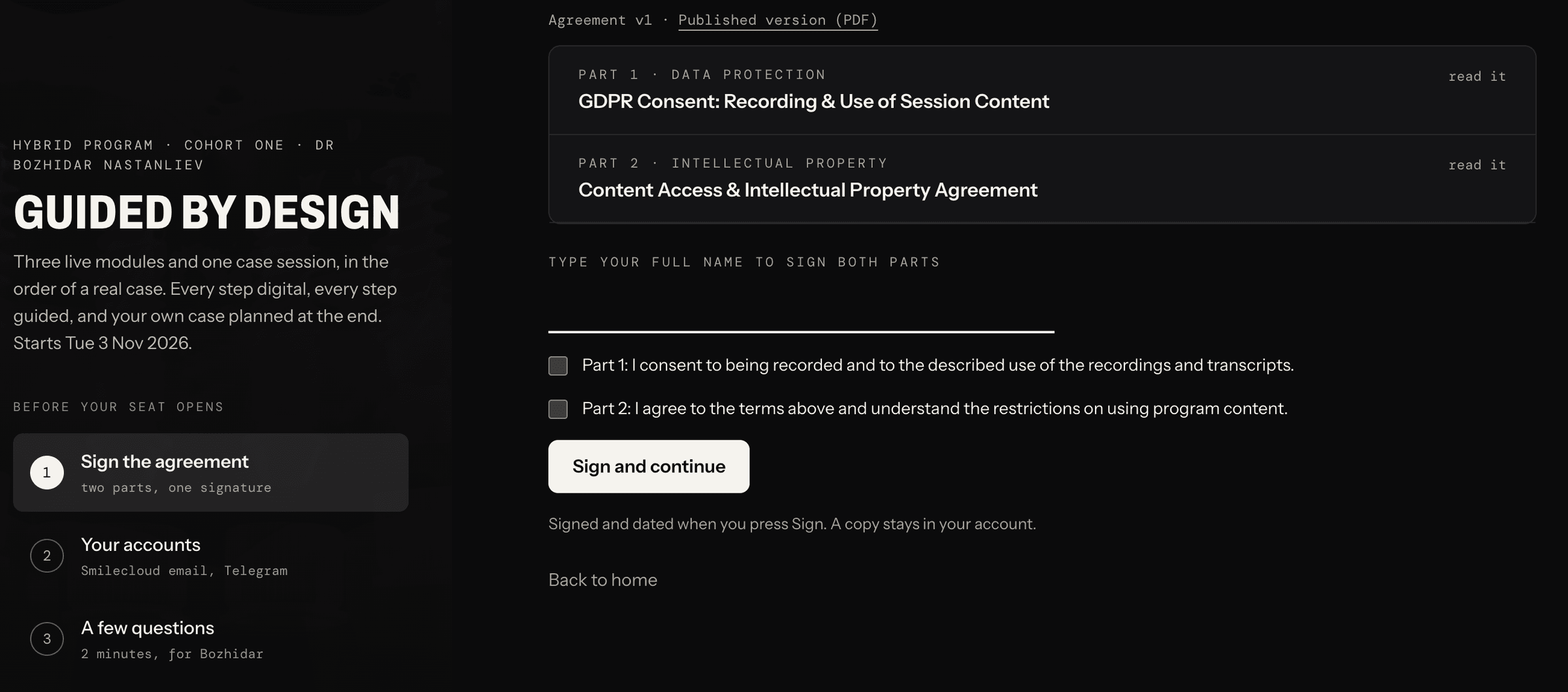
Onboarding runs itself. A student buys, gets a sign-in link, and lands on the part that used to take manual labour and more than a few reminders: signing the agreement, joining Telegram, confirming notifications, a short questionnaire. Nobody has to remember to send anything.
Every recording gets captions, chapters, and a recap within minutes. The expert can review the material, and the student can search for a specific term and jump straight to the moment it was mentioned.
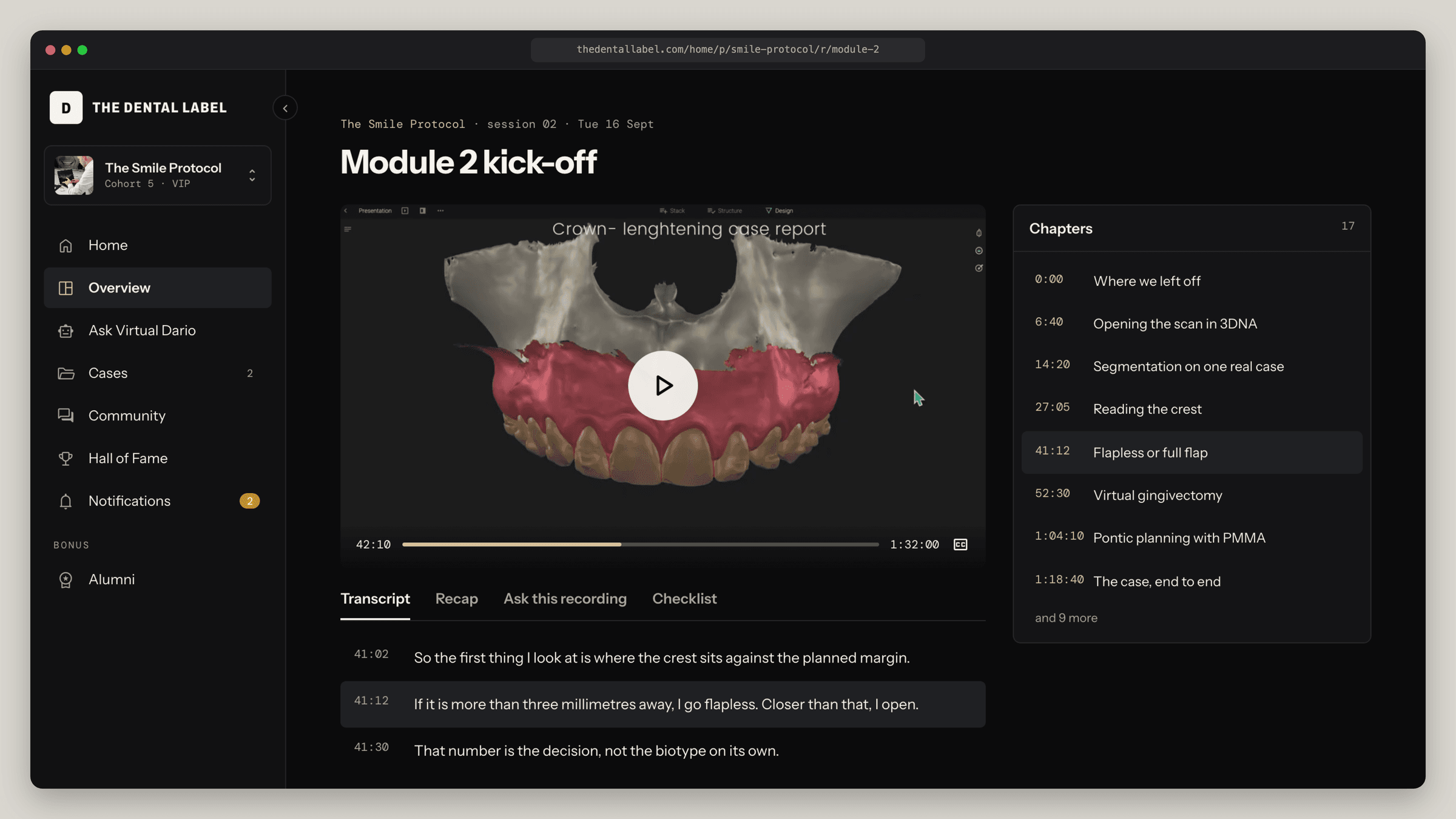
No more trying to remember which module contained that one explanation.
And because the recordings are searchable, the material becomes much more useful long after the live session ends and it's immediately available to our AI strategist
Flowie, is AI strategist that can search across the programs a student owns, community discussions, upcoming calls and other relevant section of student platform.
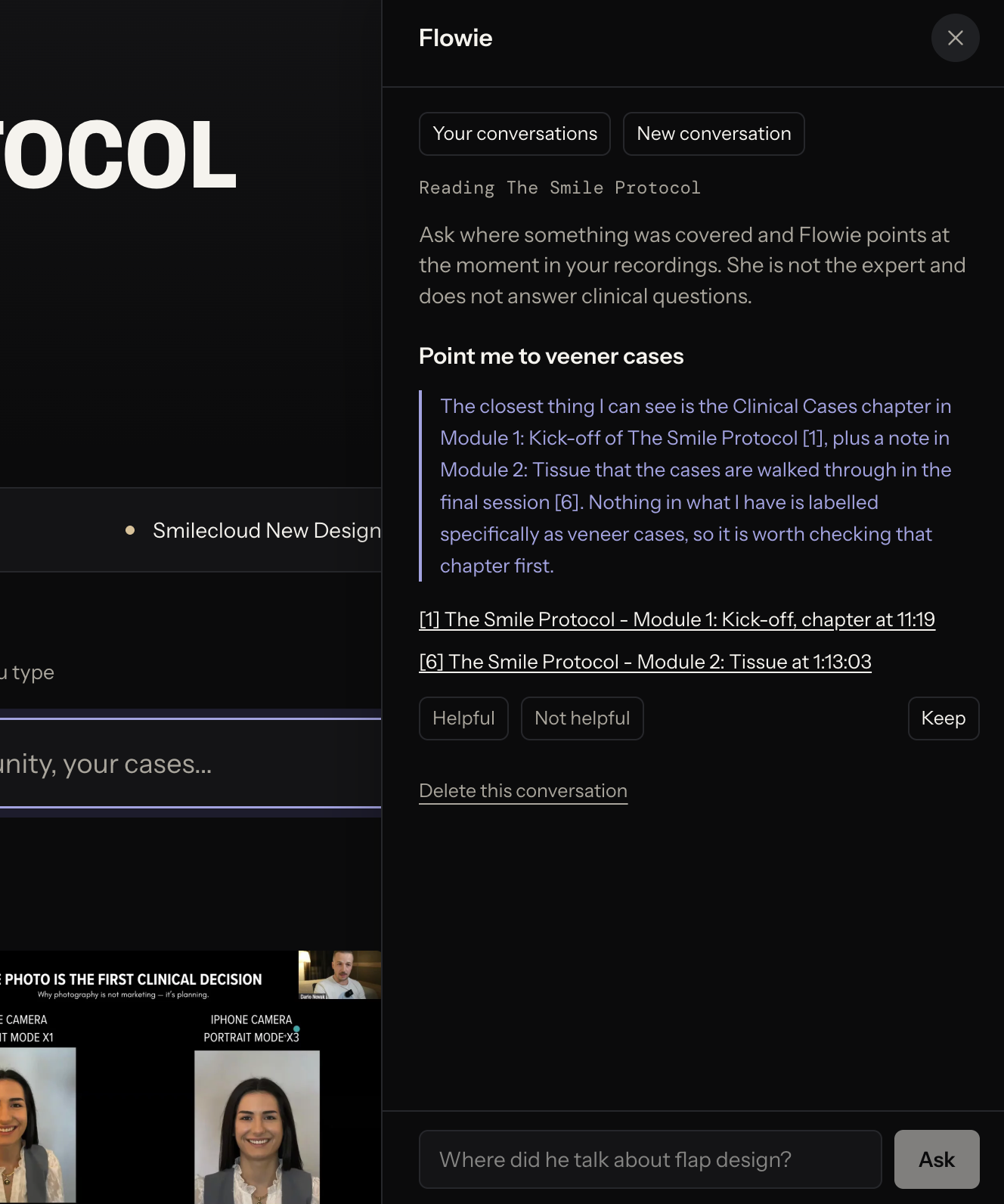
A student can ask a question, get an answer with a reference to the exact moment in the recording, and find out what's already done and what comes next.
The important part for me is that the answer isn't just floating around on its own. The student can go back to the original material and see the context.
Then there's virtualX, which sits alongside the content.
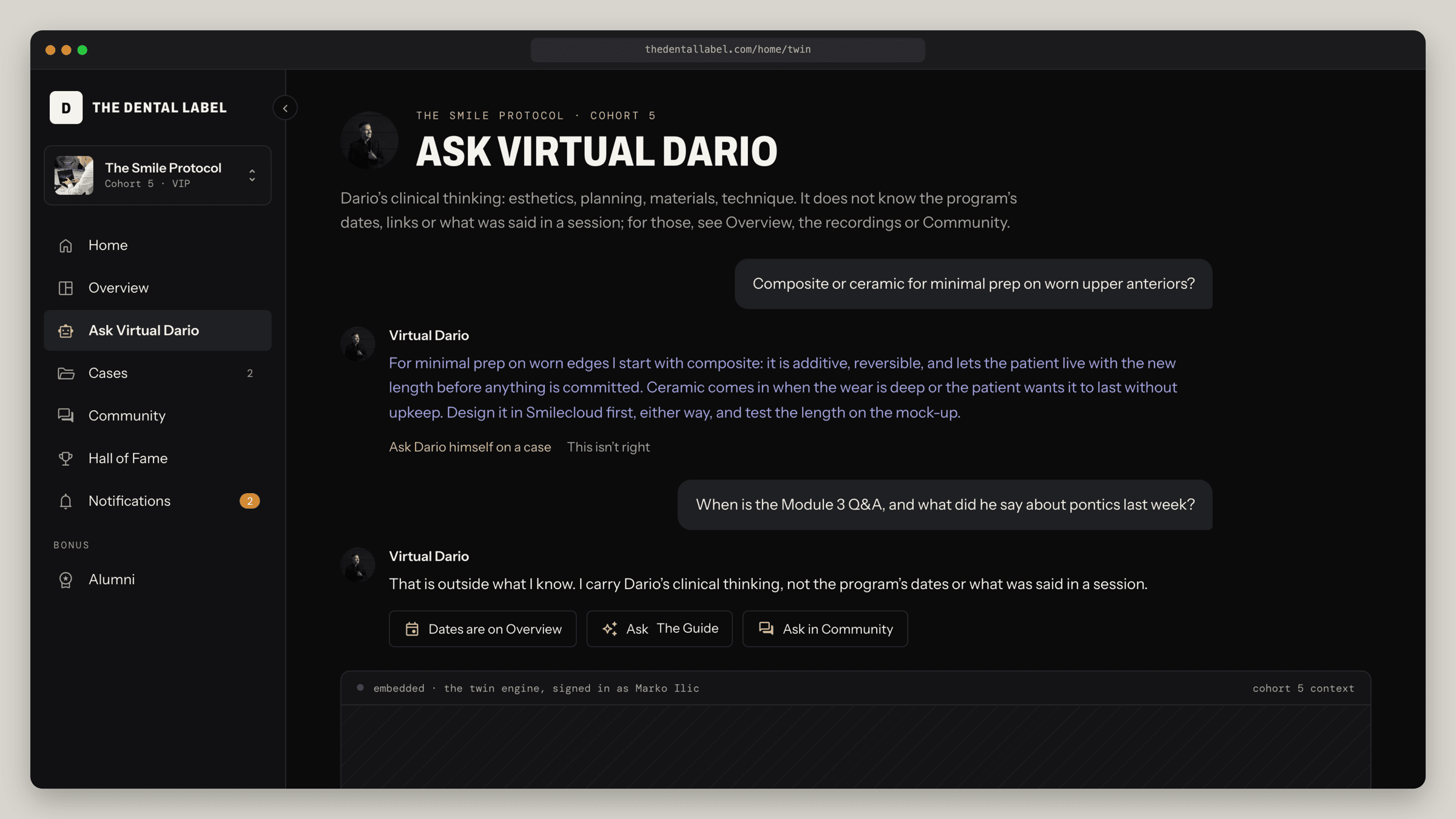
This is the part I've written about quite a bit in previous letters. It's an AI version of the expert (in our case Virtual Dario) that answers only from knowledge the expert has reviewed and approved.
When the answer isn't there, it says so. When the question crosses a boundary, it refuses and sends the conversation back to the real expert.
I don't want an AI pretending to have the expert's judgement. I want it to help with the things the expert has already explained, while knowing when it needs to step aside.
Another part I'm particularly happy with is how we handle individual cases aka hands-on work with students in a group setting.
A student can submit a case with photos. The expert can respond with a voice note or a screen recording directly from their phone, and the response is transcribed and stored in the same conversation.
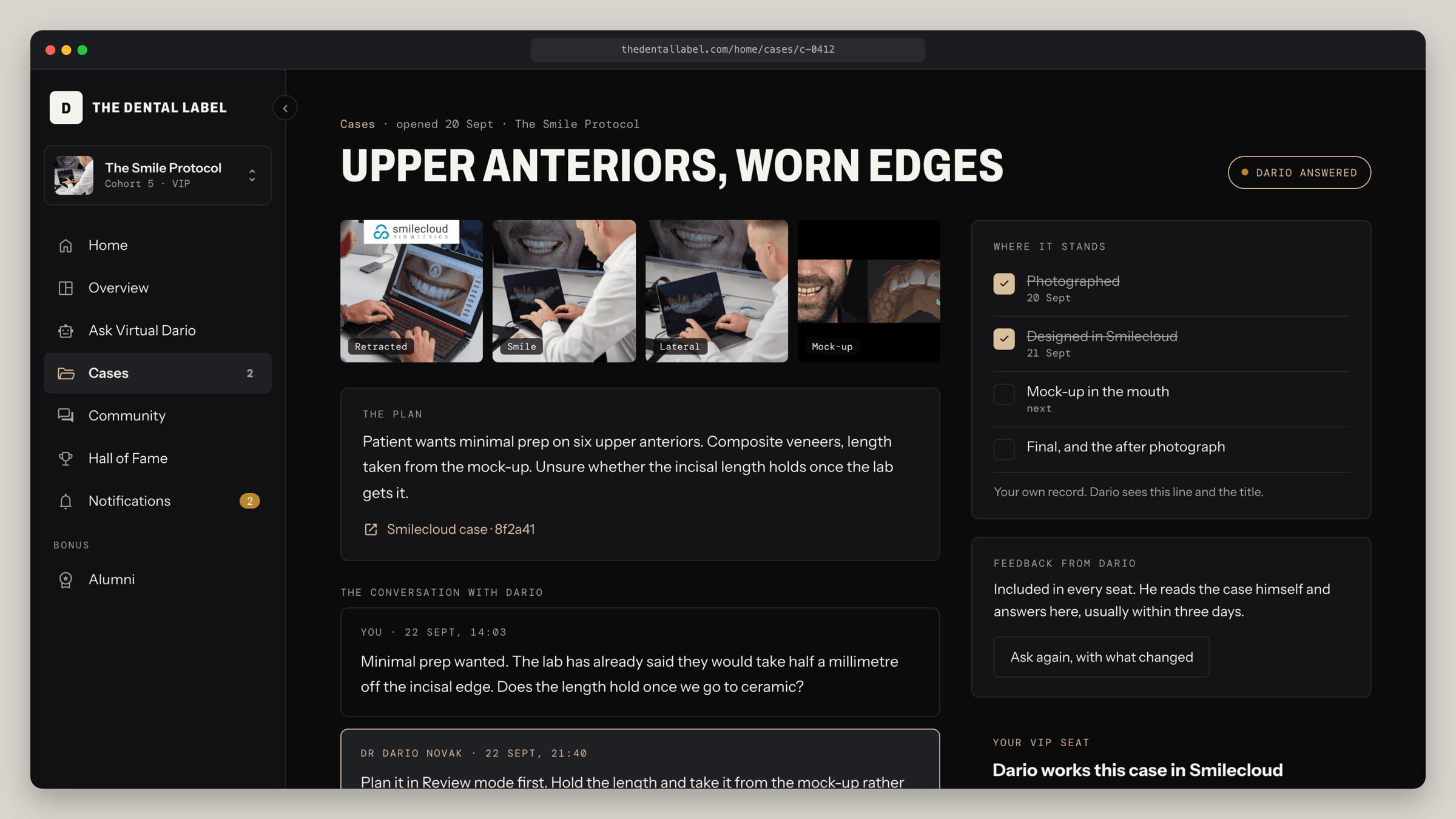
Three weeks later, the student can find it again.
That might not sound particularly exciting if you're looking at a feature list. But if you've ever tried to find a specific piece of feedback buried somewhere in WhatsApp, you know why it matters.
The same goes for the expert's view of the cohort.
They can see who's been active, who hasn't watched the latest session, and who has gone quiet.
Instead of finding out months later that someone stopped engaging, they can reach out while there's still time to help.
And one of my favourite parts is actually on the content creation side.
The expert drops a recording into the library and walks away.
When they return, the captions, chapters, recap, title, and description are ready for approval to be immediately integrated into their programs, AI strategists and membership section.

The expert still owns the knowledge and the final say. We just remove as much of the repetitive work as possible by following our main rule "human led, AI assisted".
So things that matter happen with less effort from both sides.
4/ Back to your business
You don't need The Dental Label to benefit from the thinking behind it. You probably have a few things in your own delivery that have bothered you for a while: clients asking questions you already answered, good feedback on a call with no way to revisit it, no idea someone stopped engaging until they don't renew.
Building your own platform doesn't automatically fix any of that. You can spend months on something impressive that your clients don't enjoy using.
I've made enough of those mistakes to know the technology isn't the difficult part anymore.
The difficult part is understanding what your clients need, what you want to make possible for them, and which parts of the experience deserve to be different.
The point isn't to build more software. It's to stop letting your software decide what your clients' experience can be.
I don't have the capacity for a full done-for-you platform buildout. But I'd gladly design one with you.
That's The Client Flow Blueprint:
- your current program, how your clients actually move through it,
- where the eight rules break,
- and what the tech to fix it looks like,
- or what add-on tools should be built for your existing platform
You leave with a client journey map and a tech blueprint a team of developers, human or robots, can build from.
Interested? Send me a message and I'll share the details.
-Filip "not sorry for bragging" Sardi

Frequently Asked Questions
Why build your own client platform when Kajabi, Circle and Teachable exist?
Because the way we wanted to deliver the experience and use AI didn't fit the platforms we had. The bigger platforms spent years on foundations that can't be ripped out when a new idea comes along, so AI arrives there as an add-on bolted onto an experience that wasn't designed around it. The letter is clear: if you have a handful of high-touch clients and your setup works, keep it.
What are the eight rules behind The Dental Label platform?
They came from a month of thinking about the real 'life happens' people: the dentist studying at ten in the evening, the person who wants an answer now, the student who will not rewatch a 60-minute recording to find one explanation, and the expert trying to remember which student needed what. For the student: No long videos when all they need is one answer; The next step is one click away, not five screens; Help when the question comes up; Less information, more next step. For the expert: Uploading never costs the expert half a day; Individual feedback never gets buried in WhatsApp; You notice who went quiet before renewal time; If it takes five screens, it won't get done. Nothing groundbreaking on its own, but every part of the platform exists for a reason.
What happens to a recording on The Dental Label platform?
The expert drops it into the library and walks away. Within minutes it has captions, chapters, a recap, a title and a description, ready for the expert's approval. Students can search for a term and jump straight to the moment it was mentioned, and the material is immediately available to Flowie, the AI strategist.
What is Flowie and how is it different from Virtual Dario?
Flowie is the AI strategist that searches across the programs a student owns, community discussions, upcoming calls and the rest of the student platform, answering with a reference to the exact moment in a recording. Virtual Dario is an AI version of the expert that answers only from knowledge the expert reviewed and approved; when the answer isn't there it says so, and when a question crosses a boundary it refuses and sends it back to the real expert.
What is The Client Flow Blueprint?
A design engagement rather than a done-for-you build: your current program, how your clients actually move through it, where the eight rules break, what the tech to fix it looks like, or what add-on tools should be built for your existing platform. You leave with a client journey map and a tech blueprint a team of developers, human or robots, can build from.
Client Flow Letter
If this was useful, the next one will be too.
Retention strategy for coaches and founders — every week. No filler.