Are you having fun?
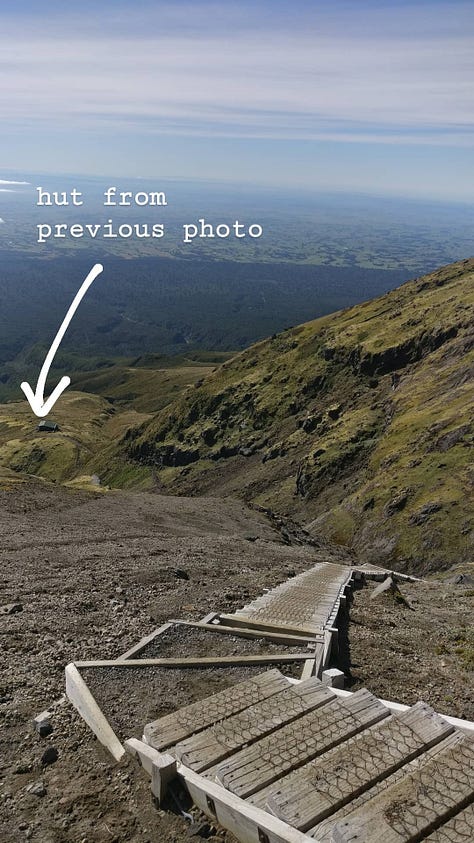
Mt. Taranaki is one of those symmetrical volcanic peaks that looks deceptively beautiful from a distance, the kind that tricks you into thinking "this will be fine" until you hit the steepest section where you have to make 1000 meters of vertical ascent in a 2km stretch.
It's the part where you can only take micro-steps, where sometimes you're on all fours, where every few minutes you have to stop and catch your breath - which, if I'm being honest, I needed more often than I'd like to admit.
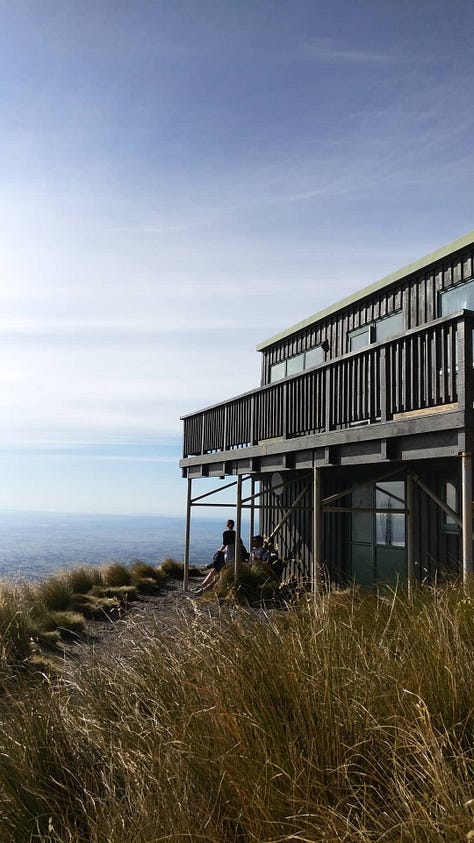
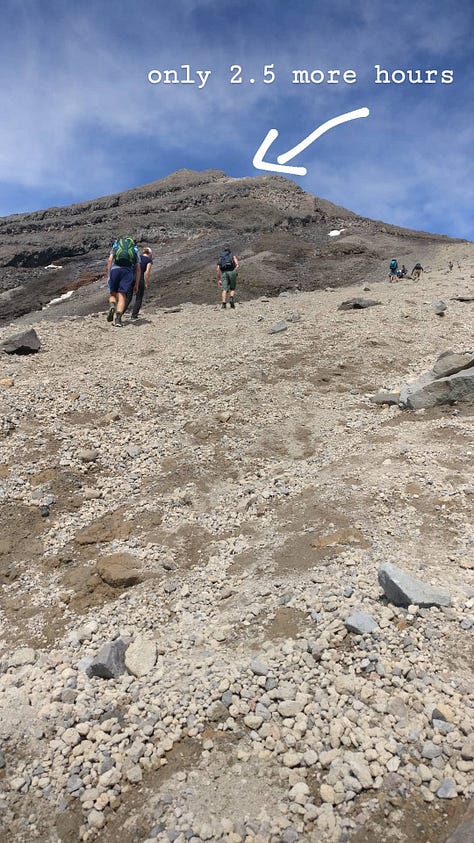
I was mid-break and breathing heavily, when a little boy appeared on the trail coming down from the summit with his father.
The boy, maybe seven or eight years old, stopped right in front of me.
Boy: "Ahoy, it's a beautiful day today...wouldn't you say?"
Me: (breathing heavily) "Yeah...khm...uhm...beautiful."
Boy: "Nice, nice..."
Then he just looked at me, studied me for about ten seconds, and asked:
"Are you having fun?"
I paused.
Me: "Well...kind of..." (implying my very obvious out-of-breath state)
He tilted his head, looked at me like I'd just said something confusing, and then delivered the line:
"Well, you should be having fun."
And just like that, he moved on like a little wise Yoda who'd completed his mission.
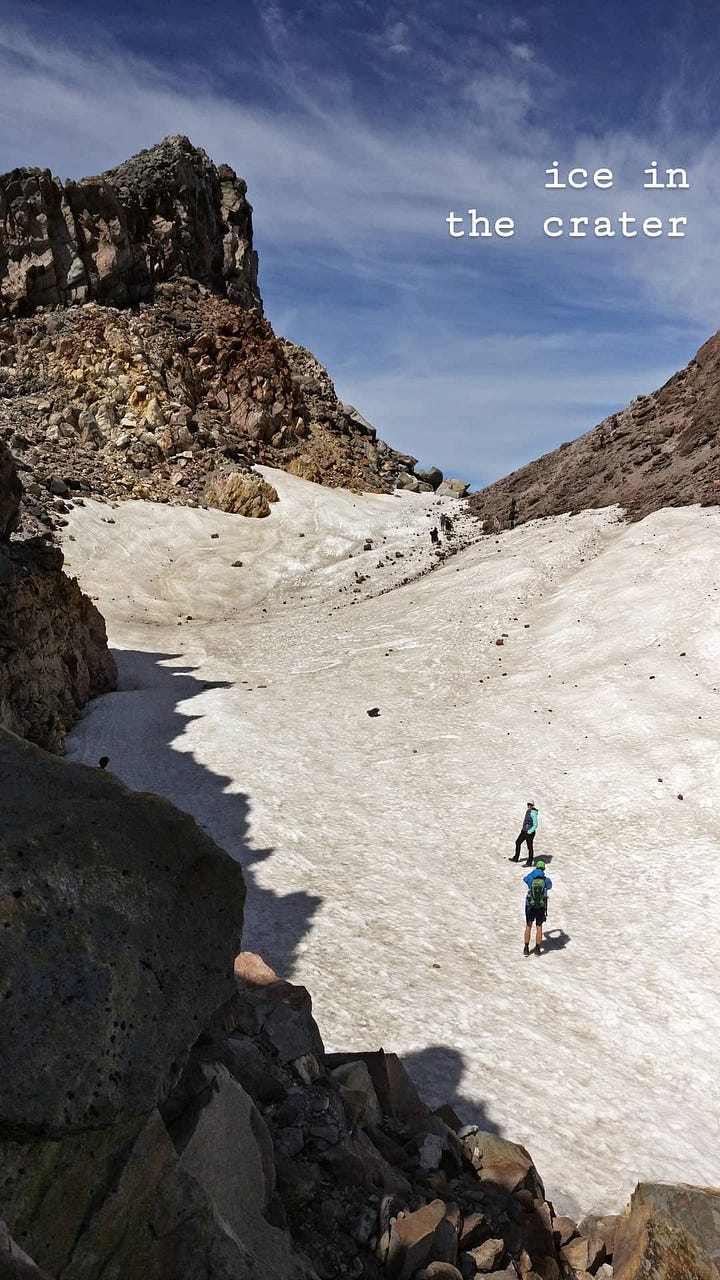
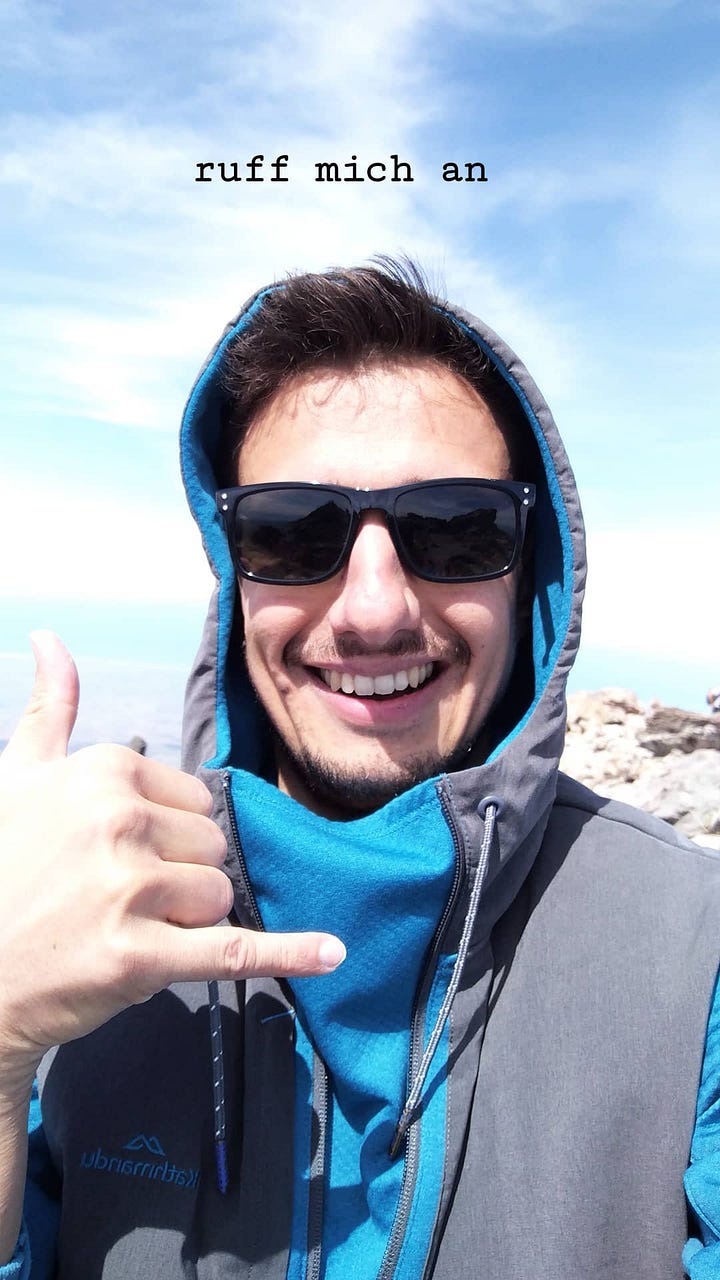
The journey up didn't get any easier after that, the mountain didn't suddenly flatten out, but it was undoubtedly more fun.
The first part of my day had been filled with stupid "why am I doing this" and "should I just turn back" thoughts, and the rest was filled with laughter, curiosity, and presence.
2 of 5
The tech nerd wants to play
I hadn't thought about that moment in a while until my friend Phil Powis posted a note on Substack a few days ago.
When I read "the juice" part, it immediately translated into "fun" in my head and I saw the Mt. Taranaki image.
That brought the mountain story flooding back, and I knew it was time to explore Phil's question a bit more, and maybe even give myself permission to something unexpected.
Most people know me as the client flow guy now - momentum, renewals, retention, the human side of building client-first businesses.
But there's another part of me that's been sitting patiently in the background for a while, the part that got me into this whole online business thing in the first place back in 2015-16.
The tech nerd.
The tech nerd who loves systems, workflows, AI agents - the whole technical playground where you can get lost for hours just trying to make one thing click into place.
I've actually been building this stuff behind the scenes for months now, and it's the same feeling I had back then when I was building funnels and automations at 2am, fueled by cheap coffee and the simple joy of making something work.
That feeling of seeing a problem clearly and knowing exactly how to solve it.
3 of 5
The 72-hour "FlowOS Lab" sprint
Here's briefly what I'm doing this week:
I'm clearing my schedule and running a 72-hour build sprint where I'm going full nerd mode.
I'm building a set of FlowOS AI agents and workflows - and documenting the entire process in real time as I go.
I'd already started building this lab publicly - letter 008 lays out the seven tools and the constraint behind them.
Not polished tutorials or "here's the perfect way to do this" - just raw documentation of what I'm building, why it matters, what breaks, what works, what I'm learning along the way.
The plan
Start: Wednesday 7am. End: Saturday 7am.
Daily rhythm:
- Morning whiteboard session (mapping what I'm building)
- Builder session (actually building it)
- Implementation session (testing and refining)
- Evening debrief and update (what worked, what broke, what I learned)
Plus I opened up a group chat for anyone who wanted to ask questions or follow along in real time during the full 72 hours.
If you want a closer look at the tools that came out of that sprint - and the way I think about delivery friction inside a coaching business - the easiest way in is The Gameplan. We map your client flow, find the parts that drain you, and decide which ones to automate or remove.
4 of 5
Why you should pay attention
I know some of you are reading this thinking:
Cool Filip, but I'm not a tech person, why should I care about your nerdy build sprint?
Fair question.
Most founders I work with are building incredible client experiences, but they're caught up in AI hype about content creation and automation - not thinking about how it could actually make their delivery easier.
That's why I'm showing you the other side by building small, specific tools that make a real difference in the parts of delivery that potentially drain you:
- personalised onboarding that takes too much time and effort
- not knowing what's happening with your clients until it's too late
- capturing testimonials or asking for referrals feels awkward
- writing the same guidance over and over to different clients
- documenting and storing your best insights from calls before you forget them
And once you better understand my approach, you'll 100% get ideas on how to uplevel parts of your delivery process.
5 of 5
So, are you having fun?
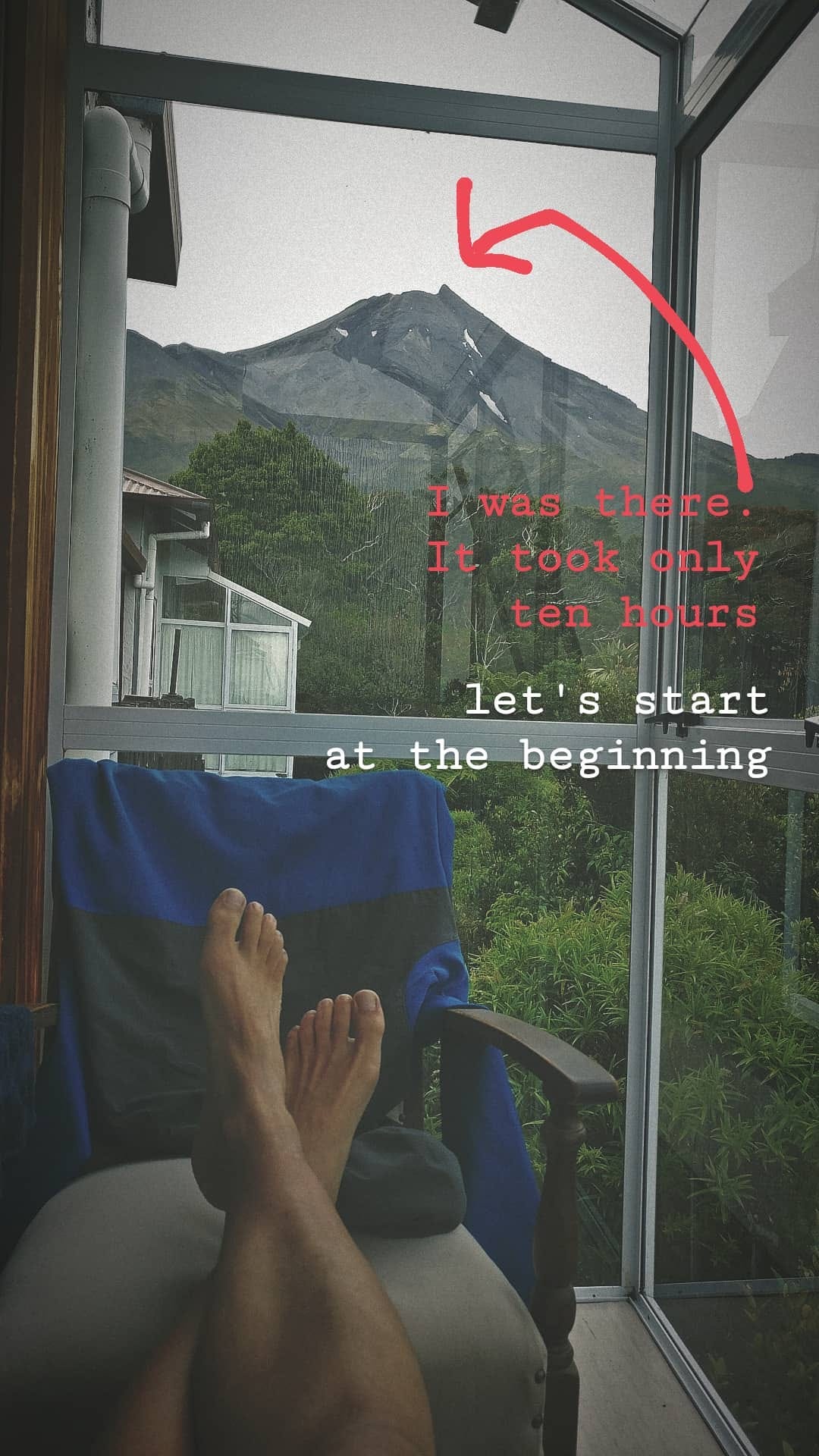
The little boy on Mt. Taranaki was right - we should be having fun more often (even when building serious business).
Since mid-November I've been fully locked into the daily boring consistent action - the morning routine, the disciplined writing, the showing up without needing anything magical to happen.
That shift has been massive for me, and I'm not letting go of it.
But I'm also starting to feel the need for something more creative, more playful, something that lets a different part of my brain come out and stretch its legs.
The 72-hour sprint was that - a deliberate pause from the steady grind to just build something fun, to let the tech nerd side play without overthinking whether it's the "right strategic move."
If you've been locked into your own version of the daily discipline grind and you're starting to crave something that feels more alive, more experimental, maybe this is your sign that you can do both.
The consistent work doesn't go away. You just get to play too.
If the part that drains you most right now is on the delivery side - onboarding, follow-through, knowing who's drifting - that's exactly what The Gameplan is built to map. 90 minutes, a written 60-90 day action plan, and a clearer picture of which parts of the work you should be having more fun with.
-Filip "let's build and have fun" Sardi 🌊
PS. Early access to the tools I built during the sprint went to the people following along - that's how FlowOS Lab started. If you want to see where it ended up and how it might lighten your own delivery, book a Gameplan call or .

Frequently Asked Questions
Why does 'are you having fun?' matter for coaching founders?
Because losing the fun is an early burnout signal long before the numbers show it. Coaches who grind through delivery without play stop bringing creative energy to client work, which quietly degrades retention, referrals, and the founder's own desire to keep showing up. Reintroducing playful, builder-mode work alongside the daily discipline restores the creative side that made the business interesting in the first place.
How do you balance consistent discipline with creative play in a client business?
You don't drop the discipline - you add a creative lane next to it. Keep the daily writing, the client calls, the boring consistent action. Then carve out short, deliberate sprints (a few days, a week) where you build something fun without strategic justification. The discipline keeps the engine running. The play keeps the founder alive.
What is FlowOS Lab?
FlowOS Lab is a set of small AI agents and workflows Filip is building to make coaching delivery easier - things like personalised onboarding, client risk signals, testimonial capture, repeatable client guidance, and call-insight storage. It started as a 72-hour build sprint documented in real time, and the early tools are released free to anyone following along.
How can AI actually help coaches deliver better, not just market more?
Most AI hype for coaches focuses on content and lead gen. The bigger leverage is on the delivery side: trimming the parts of the work that drain you - repeated guidance, manual onboarding, missed risk signals, awkward testimonial asks. Small specific tools beat one mega-AI - the goal is removing friction inside delivery, not replacing the human relationship.
What's a healthy way to spot coaching founder burnout early?
Watch for the moment the work stops being fun. Not 'I'm tired' - that's normal. The signal is when curiosity dies, when you stop wanting to build anything new, when delivery feels like duty instead of craft. That's when most founders need a deliberate creative reset, not another productivity hack.
Client Flow Letter
If this was useful, the next one will be too.
Retention strategy for coaches and founders — every week. No filler.