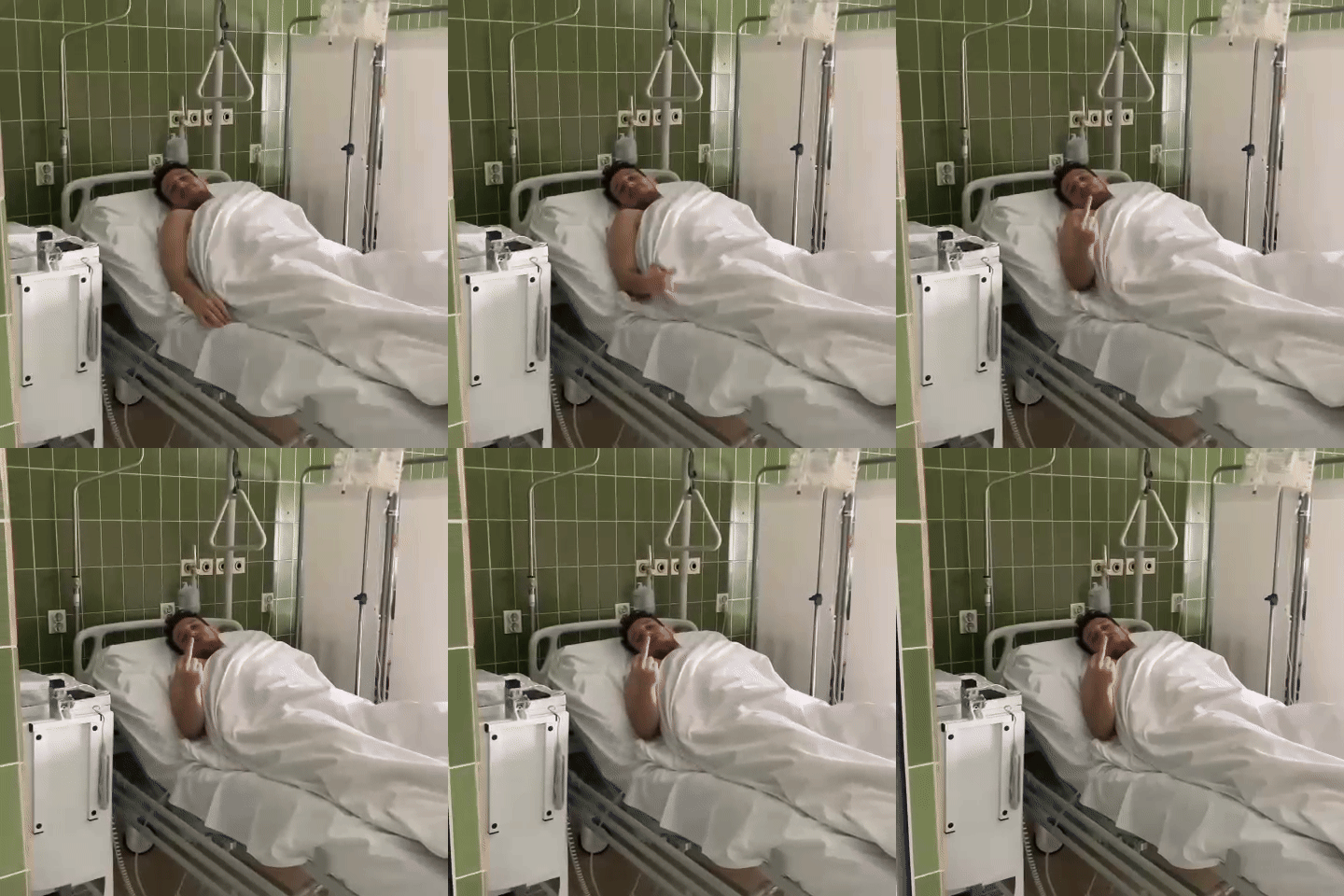
A loud bump woke me up as a nurse was wheeling me out of the operating hall.
The first thing I noticed was the ceiling moving. Then the lights. And finally I was breathing.
Which, as it turned out, was not something I could take for granted anymore.
I wish I had something more cinematic to report: a tunnel of light or an out-of-body view of the surgeons working below. But none of that happened.
What I remember before the anesthesia is asking the anesthesiologist, with complete sincerity, if they could maybe take a photo of my gallbladder.
For the memory.
(It wasn't funny to them either.)
And then: darkness. And then: that bump. And then: breathing again.
That was two years ago today, February 23rd, at around 7:49 PM.
Two months ago I posted a short note about it - just a few lines, nothing elaborate. I almost didn't publish it. It became the most read thing I've put out.
The comments told me people wanted the full story, so here it is.
1 of 5
How close it actually was
Let me rewind a little, because the story matters.
Two nights in a row I had felt an impossible pain in my chest, the kind that sits heavy and doesn't move, for hours at a time.
Third morning, I made a decision to either jump through my window or eat my many pride and call an Uber to drive me to the ER.
After spending most of the day there, they found gallbladder inflammation, gave me antibiotics, and told me I'd need surgery in a few months.
This was standard procedure, plus a follow up in three days just to be sure the situation was improving.
For two days I was in real pain. Then, on the third day, it completely disappeared.
Which is how I ended up at a crossroads that morning: go to the gym, or go to the ER for a follow-up I no longer felt I needed.

A dear friend had someone at the hospital who could fast-track the blood panel, and that small detail probably changed the ending of this story.
Once the doctor saw my results, and after waiting for more than four hours, I could see it on their face before they said anything. The only words that came were: "Start the prep."
I didn't know what prep meant, but I found out quickly.
Everything started moving fast. My dad and brother barely made it in time to say good luck - or whatever you say in a moment like that when no one has the right words. I think it was just confused "see you later."
And somewhere in there I had exactly one thought that pierced through:
Could this be it?
It lasted about three seconds. Then my stubborn brain flipped it back: No way I'm going out like this. Not from a stupid gallbladder.
Thirty minutes later I was on the operating table.
Two weeks after that, my surgeon finally admitted to me he hadn't seen anything like it in ten years - a fully necrotic, spilled gallbladder at such young age.
Also, that I was 1-2 hours away from fatal sepsis.
And that I should add a second birthday to the calendar.
So I did.
2 of 5
Time and the IV drip
The most vivid thing I remember from recovery isn't the surgery itself.
It's lying completely still on day two or three, the wound still at its most raw, unable to do anything except watch an IV drip falling in slow motion and count the seconds between each drop.
For hours.
And there was something in that stillness that felt like eternity. Like time had stopped pretending to be limited.
Then a few days later when I could finally move, I would sit by the window on the third floor and watch people below - the cars, the rush, the honking, people walking past each other without looking up.
Life was going on without me.
And I had this strange, dual feeling: I wanted back in desperately. And at the same time I wanted to grab someone by the shoulders and say - do you know how fast this is moving? Where are you rushing? Slow down and look around.
I've thought about that window a lot since.
About those two truths sitting next to each other without cancelling each other out.
Life goes by fast, and we shouldn't waste precious moments.
And at the same time, life is long and we should allow ourselves time and patience when pursuing meaningful quests.
3 of 5
The part I didn't tell anyone for seven months
Here's the version of the story I kept to myself for a long time.
I came out of surgery, recovered, got back to normal life, and then - nothing.
I didn't sit with what had almost happened. I just kept moving because moving felt safer than stopping to feel the weight of it.
For seven months I was, to put it plainly, in denial.
The kind where you tell the story and make people laugh about the gallbladder photo, but you haven't actually looked at what any of it means.
It was only when I finally stopped and let it actually land - when I acknowledged not just "that was close" but that was really close - that I could start to release what needed releasing.
That's when I started saying goodbye to projects and people I'd been holding onto out of inertia.
That's when Client Flow finally stopped being an idea stored safely on the shelf and became a decision.
Real integration isn't the moment you survive.
It's the moment you stop pretending the near-miss didn't shake you.
4 of 5
What Bonus Time actually looks like
Melissa in the comments of that note asked a simple, but deep question:
"What is something you do now that you've had that experience?"
I had to think about it for a second, because I expected to have a more impressive answer.
The real one: the 23rd.
Every month, on the 23rd, I stop for a few minutes. I take inventory of everything in between: the places I got to go, relationships with my people, the coffees that hit right, the spartan races, the conversations that surprised me, the moments I almost missed because I was moving too fast.
That's it. It costs nothing and it's become the most important habit I have.
Which is also the most accurate answer to what I expected Bonus Time to feel like versus what it actually is.
I expected permanent clarity. Deep appreciation for every moment and no more bad days.
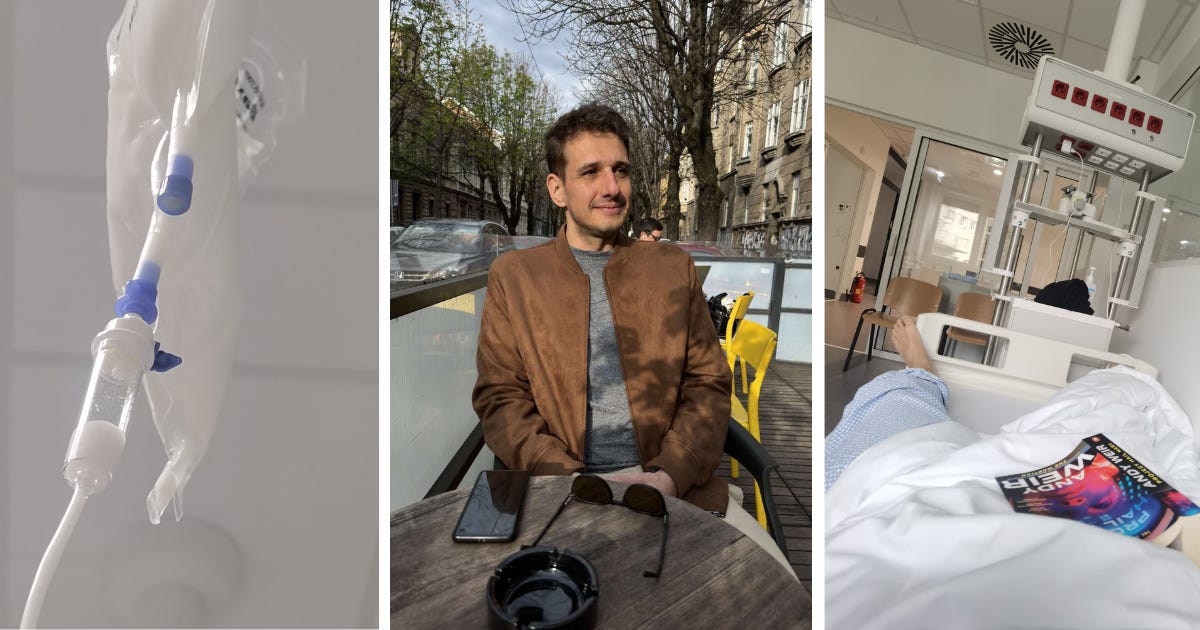
Here's what Bonus Time actually looks like:
Today, my second birthday, is a "meh" day. Nothing particularly wrong or particularly right.
I caught myself sulking that there were no fireworks. That the day didn't feel as significant as it should.
Then I caught myself catching myself, and I had to laugh.
Because that's the thing. Bonus Time doesn't transform you into someone who floats above ordinary life. You still have meh days. You still get caught up in the small frustrations that don't matter on any real scale.
And you still negotiate with yourself over things that aren't worth negotiating about.
The difference, if there is one, is that somewhere underneath all of it there's a permanent permission slip that says: you're still here, and that's already something.
So on meh days, when there are no fireworks, you start with a silly grin. Because you're still here to have a meh day.
That's the whole thing.
5 of 5
"Do you ever regret coming back?"
A friend left this comment on the note I posted a couple of months ago.
It made me laugh out loud, and my instant answer was: never, not for a second.
Though I'll admit, I'd definitely regret going out that way. My last thought on a hospital table asking for a gallbladder photo felt like a very undignified ending to a story I'm not done telling.
What the question really made me think about, though, is this:
Most of us spend a strange amount of energy treating life like something that needs to be justified before we're allowed to enjoy it.
Like you need the near-death experience to give yourself permission to slow down. Like you need to have earned the Bonus Time before you're allowed to notice the ordinary moments.
You haven't.
You don't.
You're already on your Bonus Time.
So, happy second birthday to me, meh Monday and all.
And happy Bonus Time to you, wherever you are in it.
-Filip
PS. If reading this nudged something loose - some project on a shelf, some conversation you've been postponing, some small win you stopped letting yourself feel - that's the whole point.
If you want help building visible proof of progress into your client work, so people feel themselves moving even when motivation isn't cooperating, that's what The Gameplan is for. A 90-minute 1:1 retention diagnostic, a guided self-paced FlowOS diagnostic before the call, and a written 60-90 day action plan covering the Three Blocks - Momentum, Founder, Upgrade.
(if you're new here - letter 012 explains MicroWins)
Or just and tell me about a small win you saw with a client recently. I read every one.

Frequently Asked Questions
What is "Bonus Time"?
Bonus Time is the framing Filip Sardi adopted after a near-fatal gallbladder rupture in February 2024 left him roughly 1-2 hours from sepsis. It is not a permanent state of clarity or constant gratitude. It is a quiet permission slip running underneath ordinary life, including meh days, that says: you are still here, and that is already something. The point is not to wait for a near-death experience before allowing yourself to enjoy your life.
Why did Filip stay silent about the experience for seven months?
Filip recovered, returned to normal life, and kept moving because moving felt safer than stopping to feel the weight of how close it had been. He told the surgery story as a joke - the gallbladder photo, the drugs - without acknowledging that it had genuinely shaken him. Real integration only began when he stopped pretending the near-miss did not matter. That is also when Client Flow stopped being an idea on a shelf and became a decision.
What habit did Filip build after the near-death experience?
Every month on the 23rd, Filip stops for a few minutes and takes inventory of everything that happened in between - the trips, the conversations, the coffees that hit right, the spartan races, the moments he almost missed because he was moving too fast. It costs nothing and has become the most important habit he has. He expected Bonus Time to feel like permanent clarity. The real version is much smaller and far more useful.
Do you need a near-death experience to live differently?
No. That is the central point of the letter. Most people spend a strange amount of energy treating life like something that needs to be justified before they are allowed to enjoy it - as if you need the near-miss before you can give yourself permission to slow down or notice ordinary moments. You do not. You are already on your Bonus Time. The permission was always there.
How does this connect to client retention work?
It is the same pattern coaches see in clients. People wait for a milestone, a launch, or a perfect moment before they let themselves feel progress. They miss the small wins happening in front of them. The MicroWin diagnostic Filip references comes from the same idea - building visible proof of progress into a client journey so people can feel themselves moving even when motivation is not cooperating.
Client Flow Letter
If this was useful, the next one will be too.
Retention strategy for coaches and founders — every week. No filler.