My quiet penpals, hi from Saudi Arabia.
Finally managed to add country number 28 to the list as I'm visiting my brother for some time before the next destination.
I had the most amazing time exploring Riyadh over the past couple of days (I mean just look at the "Edge of the world" location below), but couldn't wait to come back from the trip and finish this #004 letter.





IMPORTANT: From now on you can expect my weekly letter to land in your inbox on Sundays. For some it will be ideal read with your morning delicious coffee, and for others with your afternoon glass of wine.
Today's letter was inspired by a single client interaction.
When I delivered an in-depth strategy document last week, he skimmed past the client flow map and past the yearly renewal logic…
…and then stopped on one tiny part: The Delegation Menu.
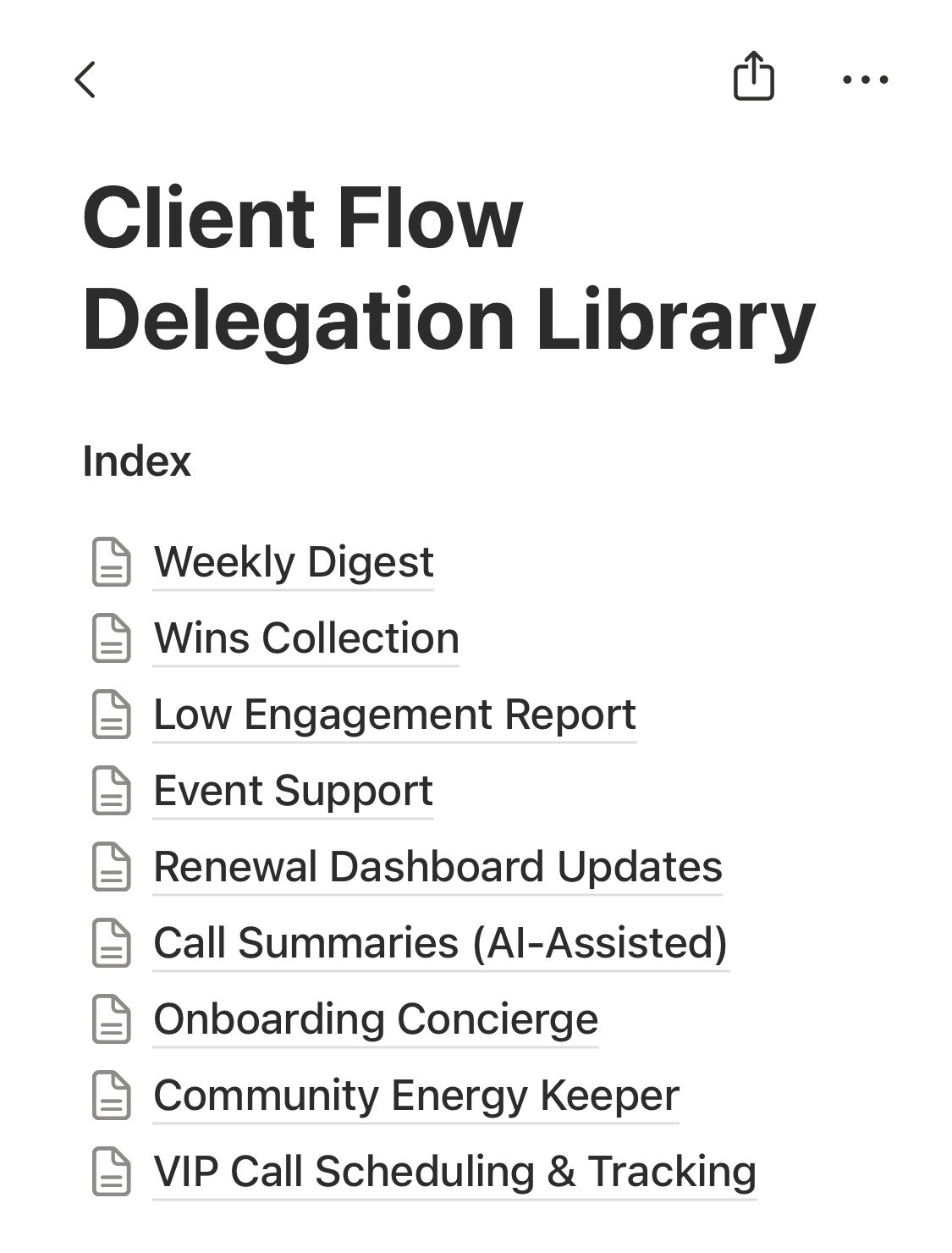
I had fun by highlighting part of the strategy document with notes that he'll most probably feel like a kid in a VA candy store when going through the list.
And he immediately replied:
"It's like you said, this feels like being a kid in a candy store…I want all of these."

Not because creating delegation system is exciting.
He was already painfully aware they were doing a lot (and believe me when I say they have more than plenty client care touch points in their client flow).
His team just never had the time or capacity to map everything in one place and actually work on the tasks that would free them without hurting client care.
This reaction isn't unique, and I see it across the board.
Founders are reaching the point where they realize they can't keep building a high-touch business by holding the entire weight of the experience in their own hands.
And that realization is both freeing and confronting.
1 of 5
The real cost of holding everything yourself
Most of the founders and coaches I work with don't resist structure or process, but they resist what feels like losing the intimacy of their work.
They want to stay connected and want clients to feel seen.
They want the ideal scenario - to be responsive, present, available, consistent.
And yet…
Somewhere along the journey, the desire to care turns into something else:
They become the emotional first-responder for the entire community.
Every question comes to them.
Every obstacle lands in their inbox.
Every micro-moment of doubt becomes their responsibility to stabilize.
They start reading every thread, every reply, every WhatsApp message, because they don't want to miss someone who's struggling.
They tell me they don't want clients to feel like they were super available at the beginning and then suddenly passed them off to someone else.
(most people have been burnt by massive guru group programs where they got the promised "unlimited access" only during the sales pitch)
They're constantly walking the line between care and collapse and eventually, almost all of them admit the same thing:
Part they loved the most about their business (working with their clients) is slowly starting to make them more and more frustrated.
And this is the key moment when they need to slow down and understand that not trying to micro-manage client care doesn't mean they care less about their clients.
2 of 5
The Dependence Loop
When founder provides "high-touch" access, then clients simply get used to it, and often take it for granted.
Not intentionally or manipulatively.
They will just use the opportunity to get the most out of the relationship.
You sold them your offer.
You are the main delivery person.
You are always available to keep them on track.
So it makes sense, if that signal is always you, for every emotional micro-moment gets routed back to you.
This creates a quiet but powerful dependence loop:
Founder available - clients rely on founder - founder gets stretched - emotional bandwidth shrinks - quality suffers - founder feels guilty - founder becomes even more available.
3 of 5
What "High-Touch" Really Means
Most people think high-touch means:
- constant availability (read getting replies at 11PM)
- immediate responses (read being glued to your phone)
- the founder being everywhere (read being the all-seeing macro-managing eye)
This is the same anxiety that became the 11PM Retention Test two months later.
But high-touch has never meant access.
High-touch means presence.
And presence is the ability to show up deeply, not constantly.
One clear message from a grounded founder carries more weight than twenty reactive replies from an overwhelmed one.
This is where support in client care, whether from a VA or an internal team member, becomes essential.
Not to replace the founder, but to protect the founder's presence and take on all the other client care tasks.
4 of 5
The Ideal Client vs. The Real Client
Founders often design their programs only around the "ideal client" - the one who is consistent, aware, proactive, grounded, and self-led.
But the real client (the human client) has cycles:
Momentum - Dips - Bursts - Silence - Shame - Comebacks
No matter how smart or committed they are, human behavior never moves in clean, linear lines.
We've all seen the popular 'day in the life' emotional wave chart, and it applies to your clients too.
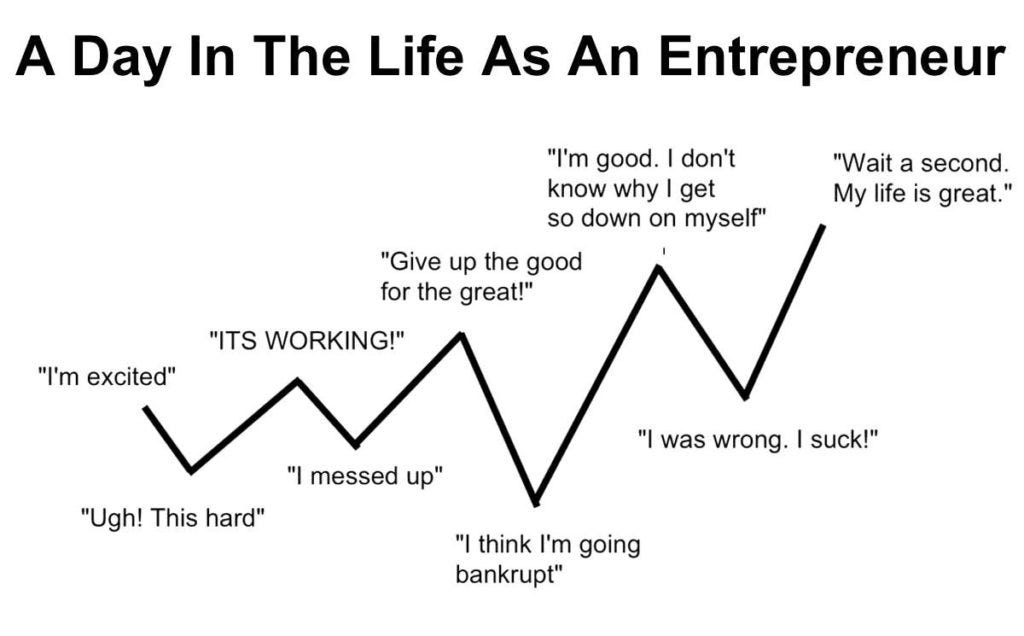
And programs break when the founder tries to personally hold all of those cycles.
This is where supportive delegation matters most and not for admin, but for emotional bandwidth.
Someone who helps notice when a member is fading.
Someone who helps celebrate when they rise.
Or just to keep the rhythm steady so clients don't fall through the cracks.
5 of 5
These Are Not "VA Tasks"
I've originally created this "Delegation Library" to primary support Client Flow tasks and not regular ones (admin, inbox, scheduling, logistics).

The idea was simple - go through our internal and client work and choose activities that support client's momentum:
- the weekly rhythm that makes people feel connected
- the wins being reflected back to them
- the emotional check-ins that keep them grounded
- the quiet watchfulness that notices when someone is drifting
- the pulse of the community staying alive
- the consistent reminders that feel supportive, not pushy
- the operational heartbeat that lets the founder stay present
These are the tasks that protect the experience for both: you (easier delivery and client care) and your clients (feeling seen and supported).
You can delegate these even if you don't have a VA, to your team member (especially the internal tasks/activities).
(I expanded this into a full Delegation Library - that's now the center of the post-sale relevance letter too.)
Want help mapping your own Delegation Menu?
If you've been carrying more than you should, and you're starting to feel it, this is exactly the kind of work we go deep on inside The Gameplan.
It's a 90-minute 1:1 retention diagnostic where we map your Client Flow end-to-end - including the client-care tasks you're holding that someone else could carry. You get:
- A guided self-paced FlowOS diagnostic (20-30 min, before the call)
- A 90-minute 1:1 retention diagnostic call
- A written 60-90 day action plan covering the Three Blocks: Momentum, Founder, Upgrade
Not because it gives you more to do, but because it finally shows you what you no longer have to do alone.
If that sounds like what you need, book your Gameplan here.
See you on the call,
Filip 🌊
PS. If your delivery doesn't fit a standard delegation map, that's exactly why the Gameplan is 1:1 - we build it around your actual Client Flow, not a template. if you want to talk it through first.

Frequently Asked Questions
What does "high-touch" really mean in a coaching business?
High-touch means presence, not constant access. It's the ability to show up deeply when it matters - not to be available every minute. One clear message from a grounded founder carries more weight than twenty reactive replies from an overwhelmed one. When founders confuse access with presence, they end up as the emotional first-responder for the entire community, and quality drops.
How do coaches avoid becoming the bottleneck in client delivery?
By delegating client-care tasks - not just admin. Map the rituals that protect client momentum (weekly digests, win reflections, low-engagement check-ins, community pulse) and hand them to a VA or internal team member. The founder stays present for the moments that actually require them, instead of being routed every micro-question by default.
What is the dependence loop in high-touch coaching programs?
It's the cycle that quietly breaks high-touch programs: the founder is always available, so clients rely on the founder for everything, the founder gets stretched thin, emotional bandwidth shrinks, quality of presence suffers, the founder feels guilty, then becomes even more available. The fix isn't caring less - it's redesigning where care comes from.
Which client-care tasks should coaches delegate first?
Not admin - momentum tasks. Things like the weekly rhythm that makes clients feel connected, win reflections, emotional check-ins, the quiet watchfulness that notices when someone is drifting, and the community pulse. These protect the experience for both founder and clients. Most coaches delegate logistics first and never get to the tasks that actually free them up.
Does delegating client care mean caring less about clients?
No. It means caring more sustainably. Founders who try to personally hold every emotional cycle of every client end up frustrated by the part of the business they used to love. Delegating the client-care heartbeat protects the founder's presence so it stays grounded - and protects clients from a founder who's running on empty.
Client Flow Letter
If this was useful, the next one will be too.
Retention strategy for coaches and founders — every week. No filler.