"Hey Filip, I lost two clients last month to AI. I know you're in this arena now, so what should I do?"
An ex-client said that to me yesterday, while I was resetting my mind on my Sunday walk. He's into branding, social media design and copywriting - very vulnerable fields to be for many experts at the moment.

We both had just a few minutes, and I had a lot more to say on this question so instead of recording him a long audio as a follow-up, I'm writing this letter.
It's for him, and it's for you if you're in a similar situation: either you already see AI affecting your client base and your delivery, or you're worried that it could.
And if it is you, I prepared a simple Claude skill that takes what I told him and helps you find your own answer in about 15 minutes (more on that closer to the end).
The first thing that stood out to me was the sentence itself. Yes, his clients started using AI for some of the work he did, but did it really make him replaceable?
Did he really "lose those clients to AI", or to something else?
1/ Separate the two
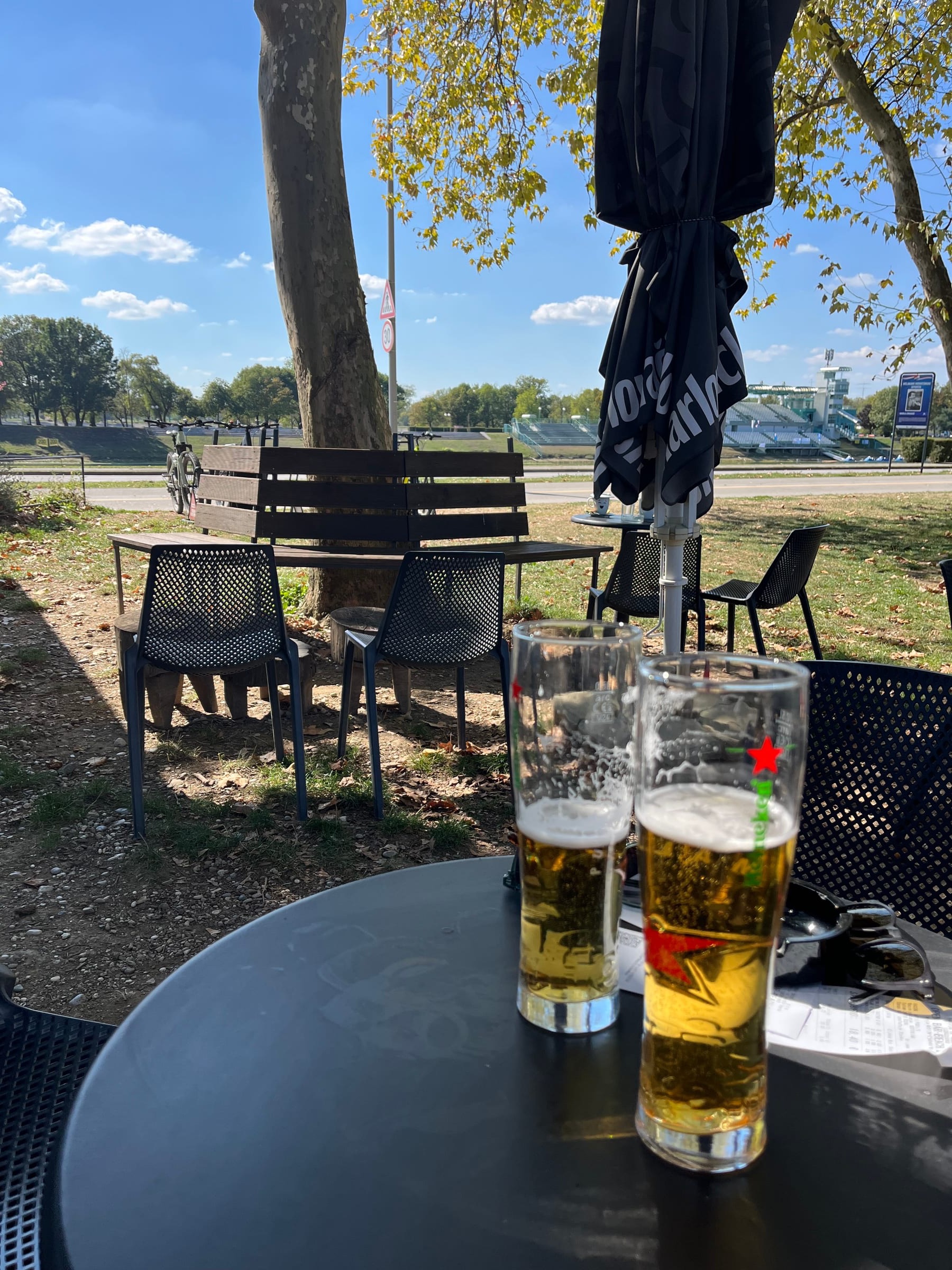
Here is what I told him after having a sip or two of beer.
Don't think about creating a new offer.
And don't think about slapping AI onto your current offer or your messaging in hopes that people will pay attention.
First separate two things: your expertise and experience on one side, and what your clients think they can do without you on the other.
Because it's one thing to create visual assets and social posts, and the other thing is to get materials that really represent you and your brand.
So if you're in a good relationship with the clients who left, ask them:
"Hey, what's happening? How has the work with AI been going? It really means a lot to me to see where I can bring AI into my work as well."
You'll learn what they think they can do instead of you, in their words.
A friend in a similar situation reached out to a client who had fired them. It turned out the main reason wasn't AI at all, it was availability and how often they got feedback. So they won that client back by simply starting what was supposed to be an awkward conversation.
2/ "It looks like every other Claude project"
When it comes to branding and materials, I see it firsthand, and I see it with the people I work with.
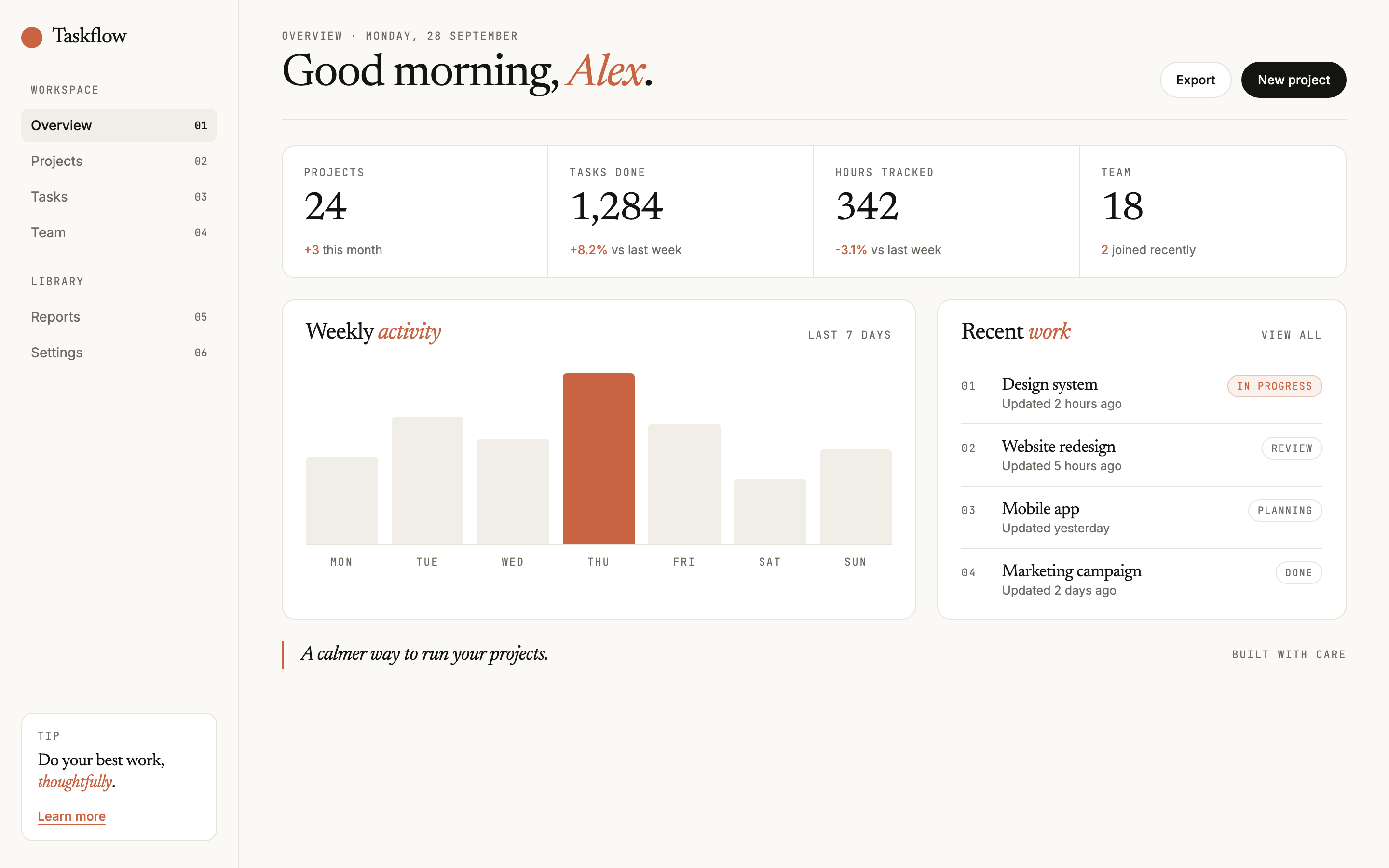
If you go to ChatGPT or Claude and tell it to create your materials, without having a strong brand guide, you get the same look everybody else gets. I started calling them "Claude Design" clones.
And it happened to me. One of the first apps I built had the default Claude web design, and I was excited to share it with someone. They said:
"Yeah, yeah, all this sounds exciting, but it's really too bad it looks like every other Claude project."
Wait, what? I was super proud of that work.
"Yeah. It looks like every other new app we've seen."
Okay, okay.
So my ex-client's superpower is his expertise: helping people bring unique branding and social designs to life.
And he doesn't have to beg anyone to see it, just show it:
Here's what it looks like when you design it like everybody else, and here's what it looks like when it's unique to you.
If people don't care about that difference, they are not your clients, and you will not convince them. I've seen generic being good enough for people, so just let them.
3/ They have to feel the pain in their wallets
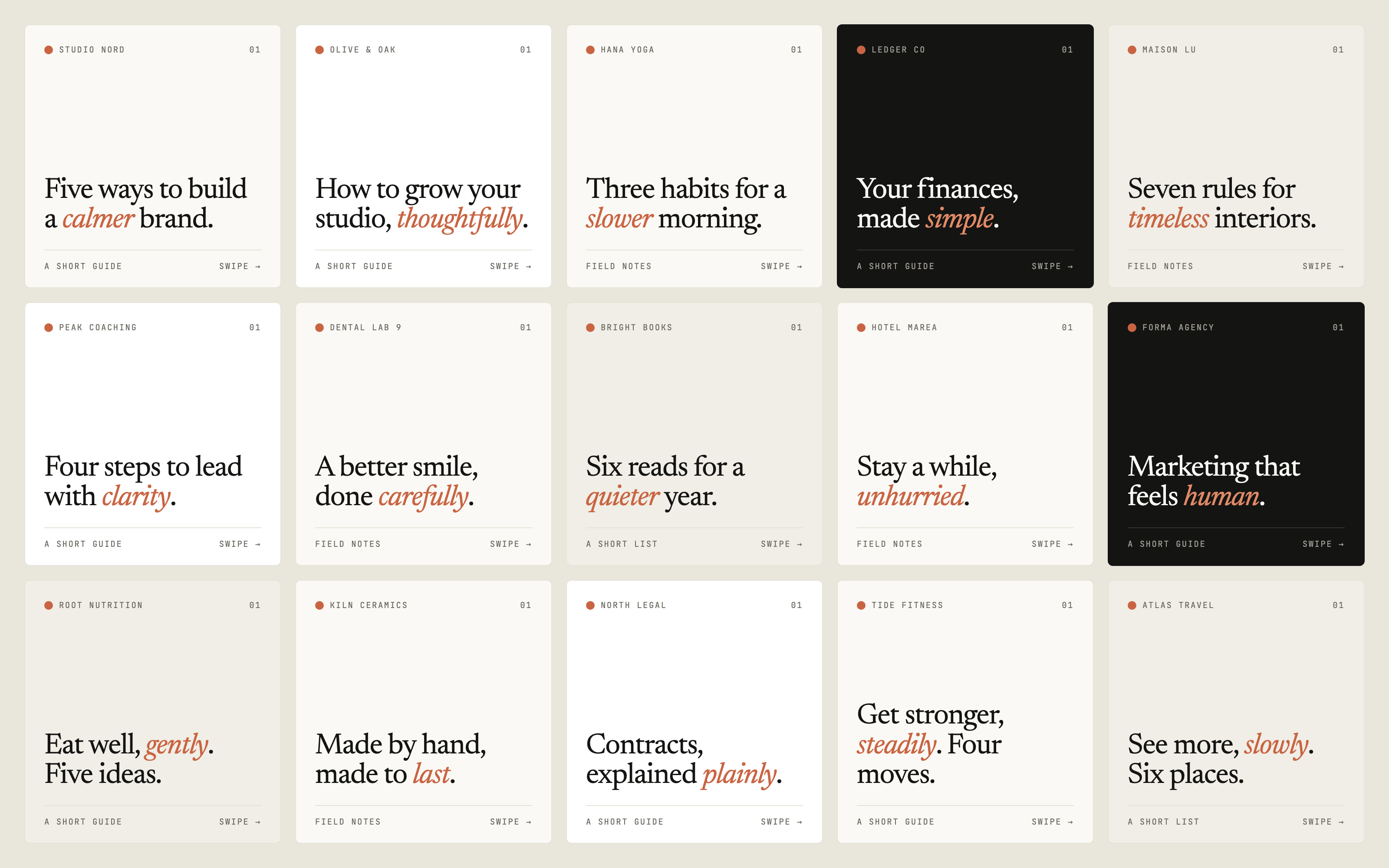
Here's what's already happening, especially in copywriting, writing assets and newsletters: the work loses its soul and its personality. And when it does, people start disconnecting from the brand.
Sooner or later, "I don't care, I can produce so much more material" turns into "fuck, people are not responding anymore, I need to change something."
You can't force people into seeing that. Most of them don't see it yet. They have to feel it in their wallets and in their metrics.
But they'll come back to you. And when they do, this is your position: here is my expertise, here is how you can use AI with it, and I can help you make the transition.
That doesn't require you to become an AI expert. It requires you to play around with the tools and see how your clients can use them.
Which brings me to the opportunity I see for him. His client already has the whole package: brand book, the guidelines, and copy / writing style.
So the question becomes: how can I teach my clients to use that package and get their materials faster?
Because why wouldn't I do that?
4/ Three levels
If I had more than five minutes with him, I would split it into three levels.
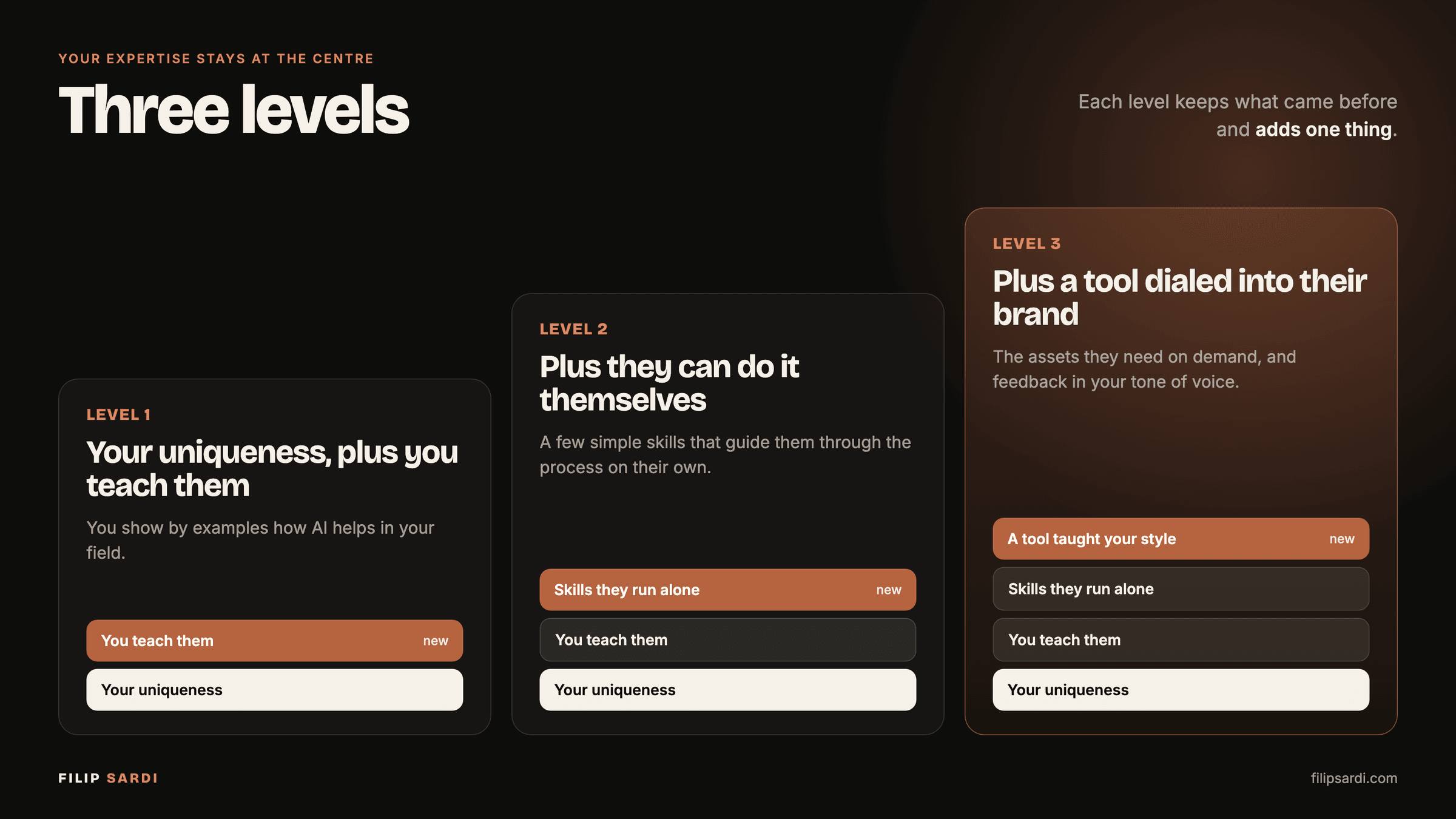
Level 1: your uniqueness, plus you teach them
My expertise is here, and I show you by examples how AI helps in this specific field. For copywriting: plan, edit and create the first drafts faster. For design: use my brand guide and my templates to create your carousels and assets.
Level 2: plus they can do it themselves
I help you create unique branding and positioning, you get the brand guide, and you also get a few simple Claude skills I made that guide you through the process on your own. A skill is just a specific set of steps your client's Claude follows.
(The skill I'm sending you at the end of this letter is exactly this kind of thing, so you can see how one feels from the client's chair.)
Level 3: plus a tool dialed into their brand
We do the unique branding, and you get a tool that is dialed into your brand directly. It helps you produce the assets you need on demand, and it gives feedback in my tone of voice, because it's been taught my style, my framework and how I do things.
I can give you an example for the third one, because it's why we built virtualX: a fully custom, done-for-you service where we help experts turn their knowledge into a virtual version of themselves that guides their clients when they're not around.
5/ Package your expertise in 15 minutes
I turned this whole conversation into a simple Claude skill.
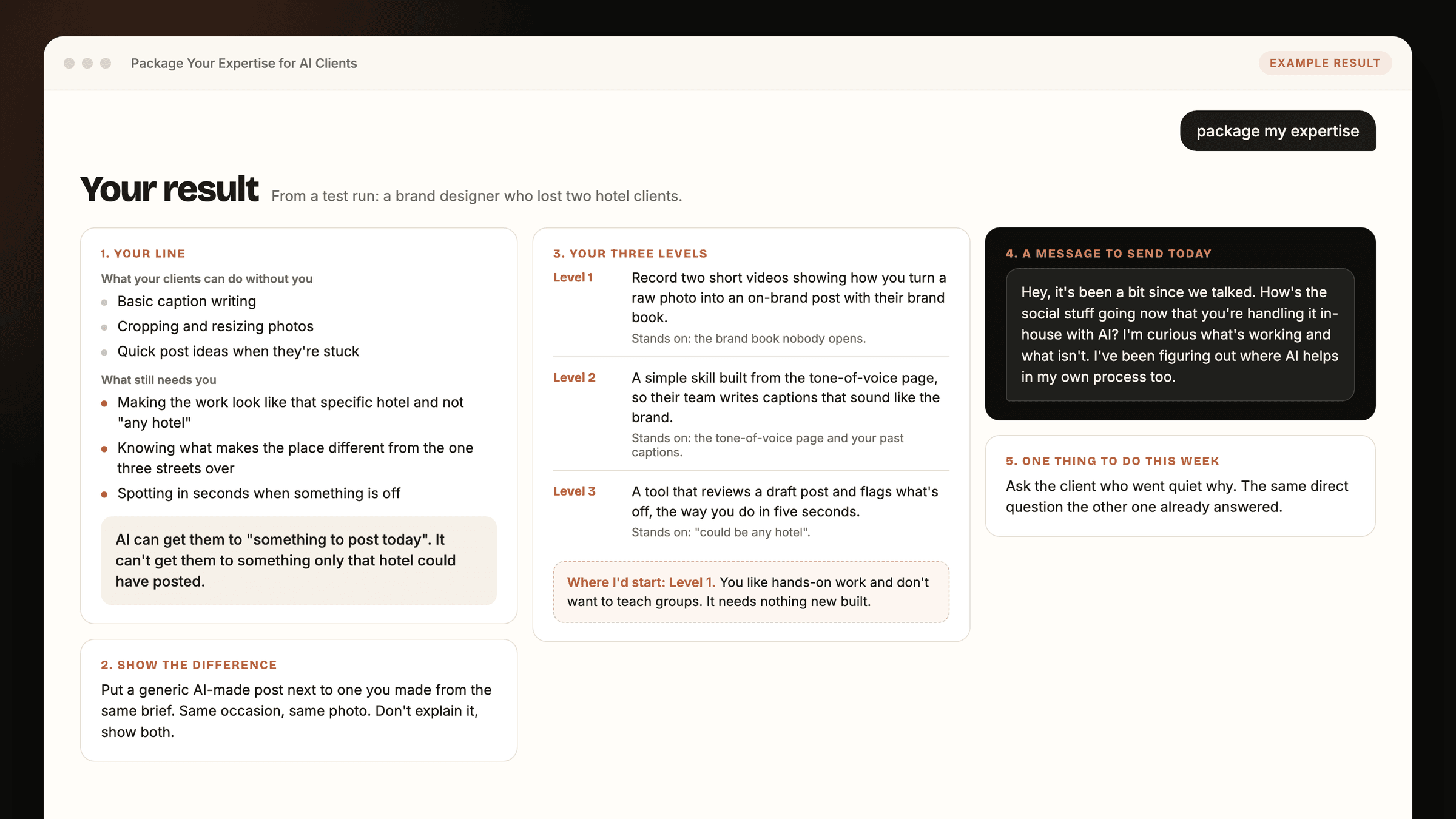
It asks you a few questions about your work, one at a time, and helps you find where your uniqueness ends and what your clients can do without you.
Then it gives you a couple of ideas for each of the three levels, based on your own answers, and a short message you can send today to a client who left or went quiet.
It takes about 15 minutes. And it's a Level 2 in action: my steps, your Claude, no me in the room.
Get the skill here, or send me a message and I'll send it to you.
Want help with the transition?
If you're in a similar position and want to use AI without it replacing you, there are two ways we can work together:
1. The Retention Gameplan
This is the place to start if you've lost clients, or you feel some of them going quiet, and you're not sure if the reason is AI or something else.
You first go through a diagnostic conversation with Flowie, my AI strategist, so by the time we talk we skip the warm-up. Then we spend ninety minutes live, mapping out your real client journey and where AI fits into your delivery. You leave with a written 90-day action plan.
2. virtualX
This is the Level 3 from this letter, built for you.
We take the material you already have and build a virtual version of you that supports your clients when you're not around. It answers only from what you've read and approved, it says "I don't know" when the answer isn't there, and it points your clients back to you for what only you can do.
The details are on the page, and the form is at the bottom.
Not sure which one fits? with one sentence about what you do, and I'll tell you where I'd start.
-Filip "fifteen minutes" Sardi
PS. If you skipped straight to the end: grab the Claude skill here. Fifteen minutes, and you'll know what your clients can do without you, what still needs you, and what to offer them next.

Frequently Asked Questions
What should you do if you lose a client to AI?
Don't build a new offer, and don't slap AI onto your current offer or messaging. First separate two things: your expertise and experience on one side, and what your clients think they can do without you on the other. If you are on good terms with the clients who left, ask them how the work with AI has been going. You learn what they think they can do instead of you, in their own words.
Is it always AI when a client leaves?
No. A friend in a similar situation reached out to a client who had fired them and the main reason was not AI at all: it was availability and how often they got feedback. They won that client back by starting what was supposed to be an awkward conversation. The sentence 'I lost them to AI' is worth questioning before you act on it.
Why does AI-made branding look the same?
Ask ChatGPT or Claude to create your materials without a strong brand guide and you get the look everybody else gets. Filip calls them Claude Design clones. One of his first apps had the default Claude design and was dismissed with 'it looks like every other Claude project.' A designer's or copywriter's advantage is showing that difference side by side: this is designed like everybody else, and this is unique to you. People who don't care about that difference are not your clients.
What are the three levels of packaging your expertise for AI clients?
Level 1: your uniqueness, plus you teach clients by example how AI helps in your field, for instance using your brand guide and templates to make their carousels. Level 2: plus they can do it themselves, with a few simple Claude skills you made that guide them through your process. Level 3: plus a tool dialed into their brand that produces assets on demand and gives feedback in your tone of voice, which is what virtualX builds.
What does the Package Your Expertise Claude skill do?
It is a free Claude skill by Filip Sardi that takes about 15 minutes. It asks about your work one question at a time and helps you find where your uniqueness ends and what your clients can do without you. It then gives you ideas for each of the three levels based on your answers, and a short message you can send today to a client who left or went quiet. It is a Level 2 in action: his steps, your Claude, no Filip in the room.
Client Flow Letter
If this was useful, the next one will be too.
Retention strategy for coaches and founders — every week. No filler.