Earlier this month I noticed something about one of my clients: he runs his whole working day inside Claude. Planning, writing and even thinking through decisions happens in that one chat window.
Everything except the project management platform we built for him.
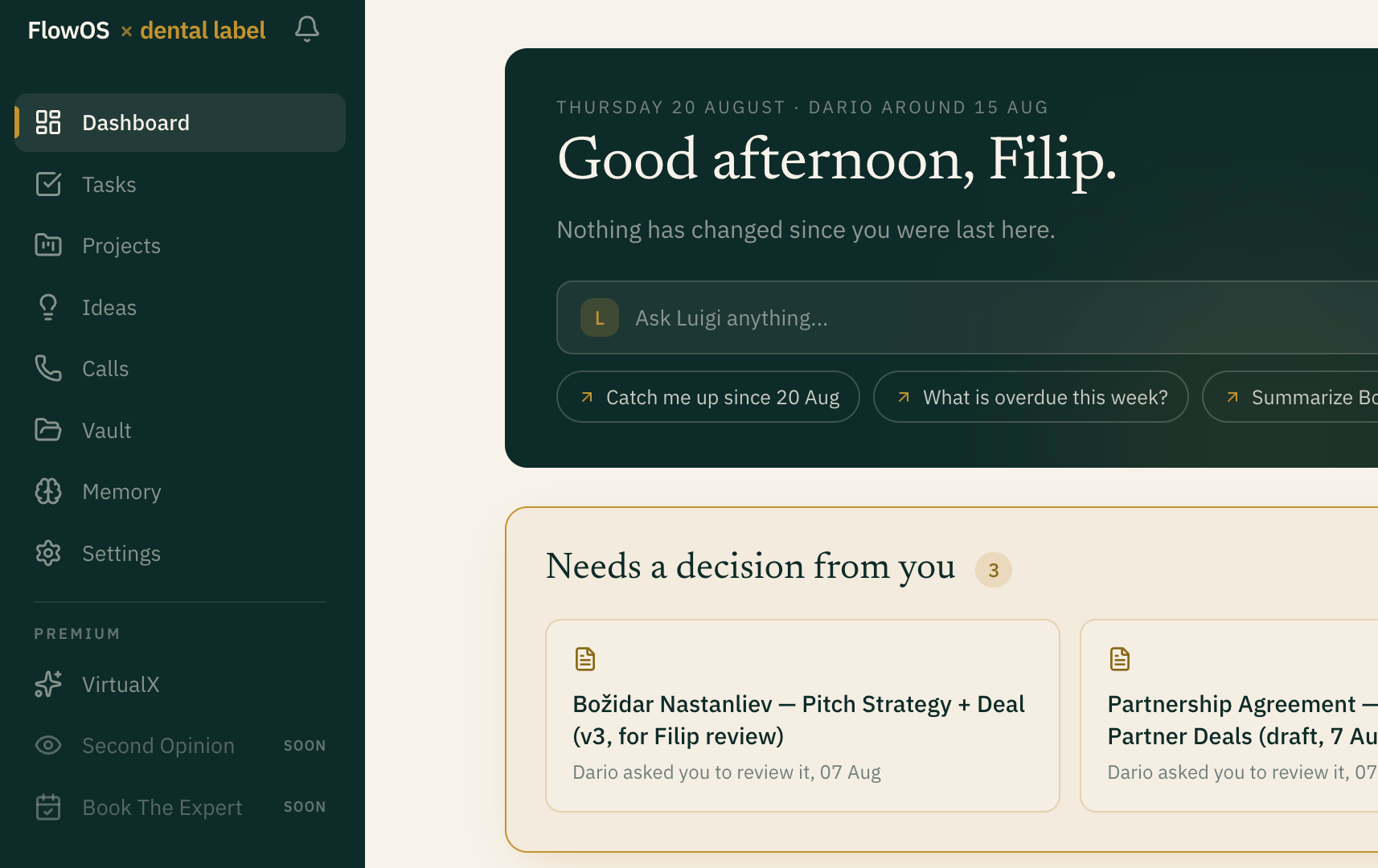
For that one thing, he had to stop mid-thought, leave the chat, open a browser tab, log in, click through to the right project, do the thing, and then find his way back to where his thinking left off.
Over and over, every single day.
We built that platform to help him, but the trip to it was slowly turning a helpful tool into a chore he had every reason to avoid.
So we removed the trip. We connected the platform directly into his Claude (through MCP - a way for AI tools to talk to other software), and now he manages his projects from the same conversation where he already spends his day. No tab, no login, no switching. His productivity roughly doubled.
The platform stayed the same and we just moved the door to where he lives.
1/ The question
I've spent the past few weeks preparing to kick off a big project in the dental education niche (big reveal is coming in a month), where I'm building the entire "virtual home" for one educator's programs and fully personalized client experience - from scratch.
The challenge: busy dental practitioners who are also educators and mentors need a simple way to deliver their programs and support their students.
My first attempt at something like this was back in February, and it was the unofficial beginning of FlowOS Lab. I wrote about it in letter #033: I built the full-blown client platform with every feature I'd ever imagined, just to learn one important lesson - for people to actually use what you build, you have to meet them where they are.
So as I upgrade FlowOS platform for my own clients, I'm carrying that same principle into the new top secret project.
And I took a week to sit with one question every day, putting myself in their shoes:
How can I meet my post-AI clients where they are, without crossing my boundaries?
(New here? By post-AI clients I mean the same people you worked with two years ago, with completely different behavior underneath. The full picture is in After They Say Yes.)
The question has two halves: where they are and where the boundaries sit, so let's take them in order.
2/ Where are they today?
In the dental niche, the students are busy professionals who want and need to uplevel their clinical skills, but have very little time outside of managing their patients and clinics.

Over the last year, I've been behind the scenes of sales and retention strategies for this exact market, in programs serving 100+ students.
Here's what support actually looks like from the student's side:
- They need one step of a specific protocol, right now, between two patients. Not the module it lives in - the step.
- They finish their day at seven, and their questions show up at ten in the evening. Whoever answers at ten wins.
- They won't rewatch a 60-minute recording to find the 40 seconds they need.
- They want to know what their level of access actually gets them: what can I ask, who answers, and how fast?
- And they want the whole technical experience simple enough that they never have to think about it.
Now swap "dentist" for your own clients…
…the founder between calls, the coach between clients, the agency owner between deadlines. The pattern holds for almost every expert-led business: your clients need support in the gaps of their calendar, not yours.
Then, once you fully understand how your clients behave today, there's an even more important question waiting…
3/ What are my boundaries?
This is the flip side, and it's where I spent most of that week.

Because "meeting clients where they are" can quietly turn into something else: being available everywhere, all the time.
So I put myself in the shoes of the dental educator who will run his programs on this platform. He's a busy practitioner too. His calendar looks exactly like his students' calendars.
From his chair, it sounds like this:
- "I want a simple way to support my students on the fly." Guidance between two patients, not a support department.
- "I want creating new materials to be easy." Talking about his craft is easy for him. Formatting, uploading, and building course pages is not. This is the same lesson as the login story at the top of this letter: the fewer trips outside the tools he already uses, the more materials actually get made.
- "I want my students to have the best possible support while I'm not around." But only from material he has approved, in his words, with the hard questions handed to him instead of guessed at.
- "I want to see what my students struggle with." Without reading every single thread.
- "And I want a clear line." What gets answered instantly, and what waits for him. Clinical judgment stays his.
That third one is exactly why virtualX exists - the engine that builds an AI version of an expert, one that answers only from material the expert approved and knows when to hand the conversation back to the human.
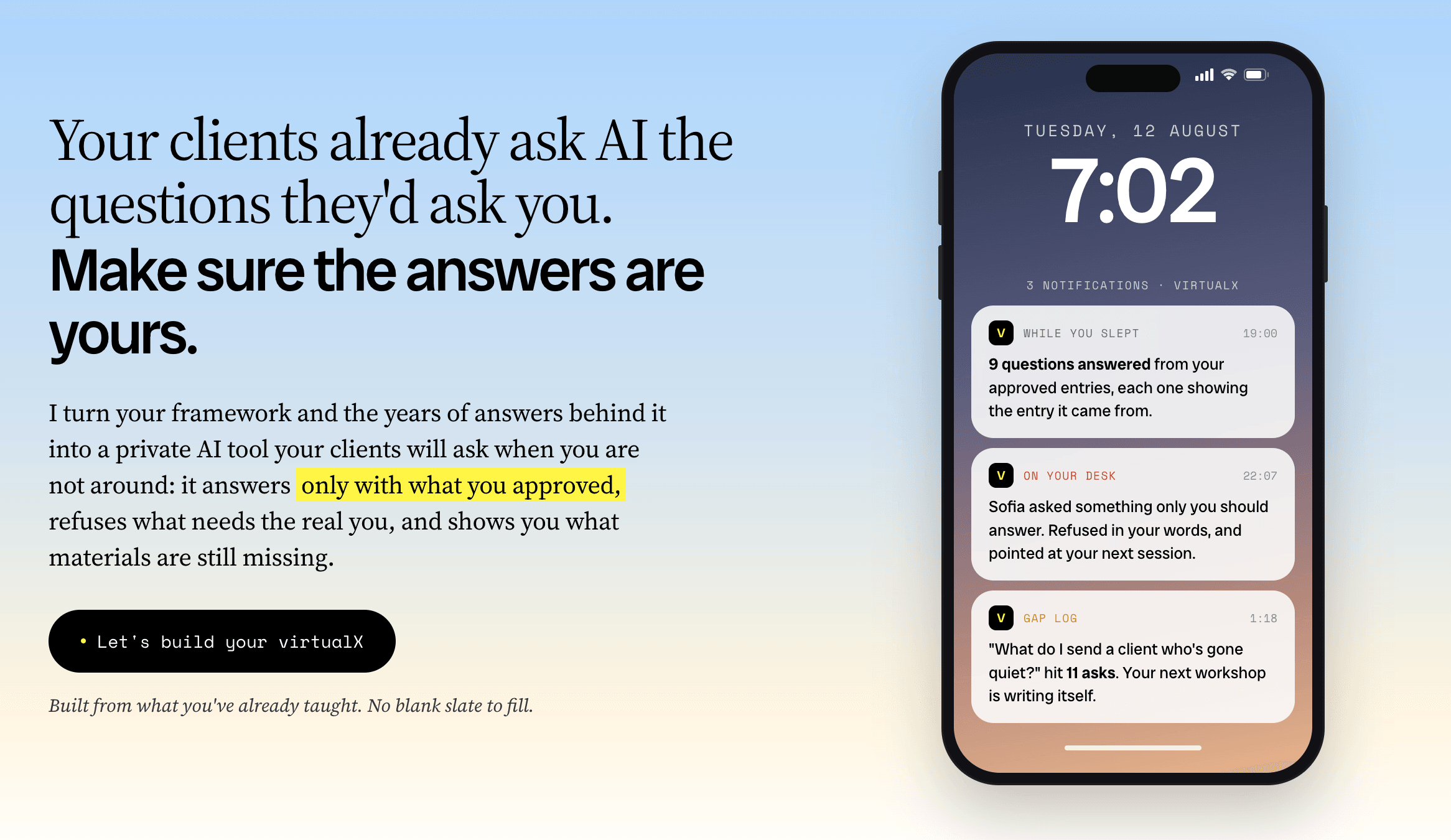
I wrote about it in one of Lab Letters: Claude is coaching your clients behind your back.
What I've learned sitting with this is that your boundaries are half the design.
Write them down before you build anything, because meeting clients where they are should never cost you your calendar, your standards, or your judgment.
4/ Exercise for you
Here's a way to answer the big question for your own business. And fittingly, you'll use AI to do it.
Copy this prompt into Claude or ChatGPT:
I run [describe your program in two or three sentences: who it's for, what it delivers, and how clients get support today].
I'm working through a question from Filip Sardi's Client Flow letters on the post-AI client: how do I meet my post-AI clients where they are, without crossing my boundaries? Post-AI clients are the same clients I had two years ago with different behavior underneath: they reach for an AI tab before they reach for me, they arrive pre-educated, and when the value stops landing they don't complain, they go quiet.
Interview me, one question at a time. Wait for my answer before moving on. And if an answer I give is vague or makes me look good, ask one sharp follow-up first - don't agree with me by default.
- Where do my clients already live during their working day - which tools do they open without thinking, and is an AI chat one of them?
- Walk me through the gap between two of my sessions from my client's side: when do they need something from me, what do they do while they wait, and where does my support go quiet?
- Of the things clients bring me, which need my judgment, and which only need my knowledge - the part that could reach them without my calendar?
- What am I not willing to change: the places where my time, my standards, or my judgment stay non-negotiable?
When we're done, give me three things: one short paragraph answering the big question for my program. The one moment in my delivery where a generic AI is most likely answering my clients in my place today. And the single smallest change I could make this week.
Fifteen minutes, and you'll have a personal version of the answer I spent a week on.
The prompt is built to interview you, and the judgment on what comes back still needs a human. So if you feel like sharing, and I'll give you my feedback and a follow-up question or two - no strings attached.
One more thing before you go
You almost certainly don't need a custom platform.
What most expert-led programs need is two or three small tools: a way for clients to get the right answer fast, a way to feel your support between sessions, and a way for you to see who's struggling.
All that while making sure you keep your calendar and spend your time on the work only you can do.
If you want help figuring out what that looks like for your program, with one sentence about what you deliver and where support gets heaviest. I'll tell you what I'd build first, and more importantly, what I wouldn't.
-Filip "moving the door" Sardi
PS. The top secret dental project will get its own letter once it's live. And if the "best possible support while I'm not around" part is the one you kept nodding at, that's virtualX - or reply and I'll send you the details.

Frequently Asked Questions
What does it mean to meet your post-AI clients where they are?
It means putting your support inside the tools your clients already open without thinking, instead of asking them to travel to yours. One of Filip's clients ran his entire working day inside a Claude chat window and had to leave it, open a tab, log in and click through for one thing: the project platform built for him. Connecting the platform into Claude through MCP removed the trip and his productivity roughly doubled. The platform stayed the same. The door moved.
What is MCP and how did it double a client's productivity?
MCP is a way for AI tools to talk to other software. Filip connected his client's project management platform directly into the client's Claude, so projects could be managed from the same conversation where the client already spent his day. No tab, no login, no switching, and no finding the way back to where his thinking left off. The work did not change; the interruptions did, and his output roughly doubled.
What do busy clients actually need between sessions?
From the student's side in a dental education program: one step of a specific protocol, right now, between two patients, not the module it lives in. Questions that show up at ten in the evening, where whoever answers at ten wins. No rewatching a 60-minute recording to find 40 seconds. Clarity on what their level of access gets them. And a technical experience simple enough they never think about it. Swap dentist for founder, coach or agency owner and the pattern holds: clients need support in the gaps of their calendar, not yours.
How do you set boundaries while making yourself more available?
Write them down before you build anything. Meeting clients where they are can quietly become being available everywhere, all the time. The dental educator's boundaries: support on the fly, easy material creation, the best possible support while he is not around but only from material he approved, visibility into what students struggle with without reading every thread, and a clear line between what gets answered instantly and what waits for him. Clinical judgment stays his. Boundaries are half the design.
Do you need a custom platform to support clients between sessions?
Almost certainly not. What most expert-led programs need is two or three small tools: a way for clients to get the right answer fast, a way to feel your support between sessions, and a way for you to see who is struggling, all while keeping your calendar for the work only you can do. The best possible support while I am not around piece is what virtualX is for: an AI version of the expert that answers only from approved material and hands the hard questions back to the human.
Client Flow Letter
If this was useful, the next one will be too.
Retention strategy for coaches and founders — every week. No filler.