Yesterday was one of those days where by midday, my brain was done - six lanes of non stop Riyadh traffic and dust everywhere did its damage.
So I went looking for a coffee oasis and literally found one - a stylish cafe tucked away behind a wall, with a small garden, a mini pond, and most importantly really good coffee.

Sitting on the terrace, I was switching between The Alchemist and a 30 page custom report on customer retention in SaaS and fintech, how AI is hurting and helping, and how it all compares to high ticket coaching and the broader education space.
Nerd in me loved the metrics:
On paper, it was everything I have been talking about for years.
Retention over acquisition.
Existing clients over new faces.
Value realized over value promised.
The corporate world is increasing their "client retention" budgets significantly.
And even if these reports are not a perfect match for our industry, I still read them like field notes from a parallel market.
Like Jay Abraham would say, one should always look to "cross pollinate" what works in one domain into another so we can stay ahead instead of playing catch up.
Big companies are upgrading their businesses around one idea:
"if we keep the right customers longer, everything else gets easier."
Meanwhile, most of the founders I write to are still being taught to upgrade their business around one idea:
"if we just find THE way to keep getting more new customers, everything else gets easier."
Which one are you?
That gap between the two is where your biggest opportunity to become a market leader actually sits.
And just to be clear, I am not writing this love letter for VC backed SaaS CEOs.
I am writing it for founders running high touch group programs, masterminds, memberships, client heavy businesses with a real human at the center.
You.
So let's talk about what the data actually says, why the usual "fixes" break things further, and how not to compare apples to oranges when you are building a client-first business.
1 of 6
What the numbers are screaming (and why you should care)

If you strip the report down to its bones, it says three simple things:
- "Getting new clients" is getting painfully expensive
- Retention is now the primary growth engine
- High-touch support and mentorship quietly outperform content-only models
Customer Acquisition Costs have jumped over 40% since 2023 across most sectors.
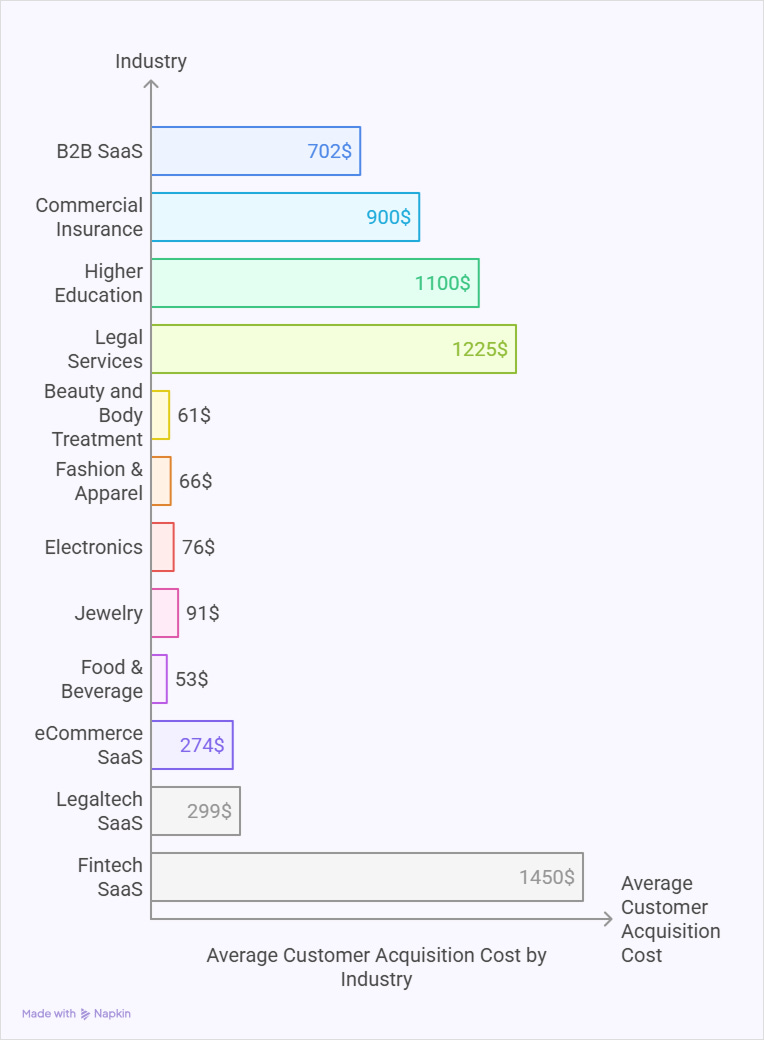
That means every ghosting client, every quiet churn and every half-finished program hurts a lot more than it did a few years ago.
At the same time, corporate boardrooms now treat Net Revenue Retention as THE health metric.
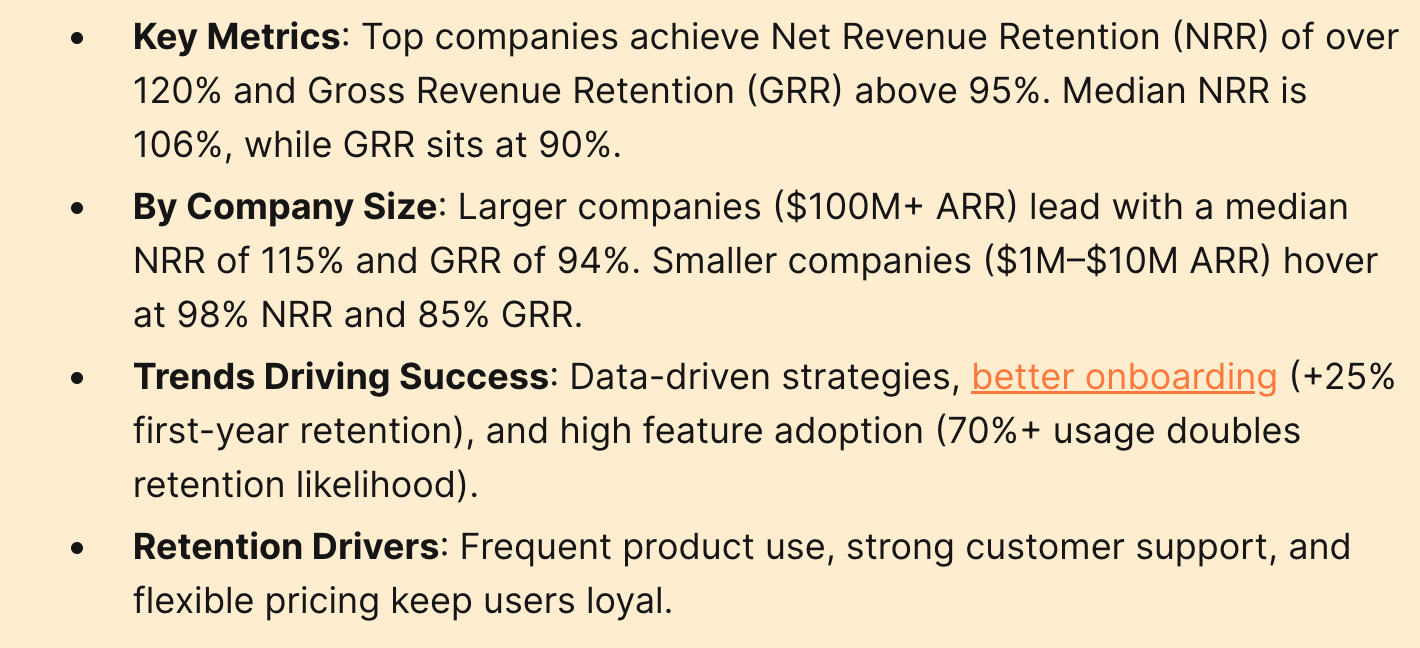
Per recent benchmarks, median NRR is 106% and top SaaS performers are above 120% and get rewarded with better valuations and better multiples.
Then there is the part "course people" don't like to talk about (but feel the pain daily):
- Self-paced online courses still sit around 13% completion (source)
- Paid structured courses creep up into 15-40% (source)
- Well designed learning with strong support can reach 60%+ completion
- Formal mentoring programs show retention at 72% (source)
In translation (but I believe you've already felt it):
- Access to information alone is losing any perceived value fast
- Structured curriculum plus light support is better, but still not helping most of your clients stay
- Human mentorship, hybrid models and accountability is where retention and outcomes finally start to make sense
So, yes, the numbers confirm what your gut has been whispering:
You need to focus more of your efforts so the right people stay and renew at the back.
On that part, I agree with these B2B and SaaS reports completely.
The problem starts when we try to import their solutions into your reality.
2 of 6
Where most people go wrong: copying the wrong fixes
Once you accept that retention matters, it is very easy to look at SaaS and corporate benchmarks to think:
"Cool, I just need a better dashboard, more automation, and an AI health score to tell me who's about to churn."
And maybe a little part of you is relieved, because that sounds like a "I just need a new tool" problem, not a you problem.
Here is a slightly different view:
Most founders in our world do not have a data problem, they have a bridge problem.
In SaaS, the Customer Value Gap (CVP) is defined as the failure to convert the initial promise into realized value over time.
On a chart, that looks like churn lines and retention curves.
In a group program, it looks like this:
They buy with clear hope ->
Life happens ->
They miss a call or two ->
Circle/Skool/GHL feels noisy and far away ->
Shame creeps in ->
They silently downgrade their expectations of themselves and of you ->
You see "low engagement."
vs.
They feel "I guess I did not follow through again."
That is the gap.
(I keep coming back to the Customer Value Gap - letter 012 traces what causes it: invisible progress.)
And this concept isn't unique to our industry.
For example, in the corporate world, this failure to convert strategic intent into operational reality is known as the Discipline Gap or the Awareness-Action Gap.
Leaders know employee retention is essential, but they fail to transform their cultures, mindsets, and behaviors.
There's a valuable lesson I learned over the years:
If you try to solve retention only with more metrics, here is what usually happens:
- You add more tracking, but still avoid hard conversations
- You automate reminders, but the language feels cold and generic
- You obsess over "active users," but ignore whether those users are actually moving toward the outcome they paid for
Your brain gets more data, but your soul gets more tired.
And your clients do not feel any safer.
That's why you cannot spreadsheet your way out of an emotional gap.
(my robot tech-nerd self from 2016. wouldn't believe I'm capable writing this)
Dashboards and AI health scores are great at saying "this person is at risk."
They are terrible at saying "here is what this particular human needs to feel supported again."
So when you try to copy SaaS playbooks without adjusting for the human weight of your work, you end up here:
- More tools
- More "client success workflows"
- Same quiet doubt in your clients' eyes
- Same knot in your stomach on renewal dates
It is not that the data is useless, you are comparing apples to oranges.
3 of 6
Apples vs. oranges
This is where I want you to be careful with the numbers.
NRR, CAC, churn rates, completion benchmarks - they are all useful as mirrors, not as masters.
They can:
- Prove that your obsession with client success is not "soft"
- Help you see where you are losing retention revenue
- Give you language to talk to more analytical people in your world
They cannot answer the questions that matter most in a client-first business:
- Do my clients feel safe enough to tell me the truth when they are struggling?
- Is the promise I sold them still alive in week 6, not just on the sales page?
- Does my delivery model give me enough emotional bandwidth to actually care?
SaaS companies talk a lot about optimizing "the first 90 days" through better onboarding because it improves year-one retention by 25% and doubles retention when 70% of features are adopted.
In our world, the equivalent is simpler and more human:
- Are they crystal clear on what "a win" looks like in the first 3 - 10 - 30 days?
- Do they have simple, non-intimidating ways to ask for help, and get support?
- Do you have designed moments to reflect their progress back to them before they forget how far they have come?
The numbers say:
"Retention is the new growth."
I agree.
But if you are building a client-first business, here is the lens I would use instead.
4 of 6
Protect emotional momentum, not just revenue
NRR cares about how much money stays and expands.
You need to care about how much client momentum stays and expands.
That means tracking and designing for things like:
- Micro-wins per client
- Moments of emotional wobble
- Instances where someone disappeared and then came back
Those are the early signals that your bridge is either holding or cracking.
5 of 6
Design containers that can actually hold your care

The report proves that high-touch mentorship structures drive retention and performance.
But "high-touch" does not mean "be available everywhere, all the time."
For you, it means:
- A deliberate rhythm of support that you can sustain
- Clear boundaries around how clients can access you
- Systems that let your best care reach more people without draining you
If your NRR looks good but you secretly dread checking your WhatsApp, that is not success.
6 of 6
Let AI and metrics handle the noise, not the relationship
The data is very pro hybrid models.
In fact, the research shows that the higher purchase conversion rate (52% versus 38% for chatbots) is attributed to human service, linked directly to greater perceived empathy, reassurance, and trust.
AI handles high-volume, low-emotion stuff.
Humans handle complex and emotional situations.
For you, that might look like:
- Automation handling failed payments and basic event reminders
- Light AI support summarizing calls or weekly client pulse forms
- AI agents increasing speed of implementation and "first draft" creation
- You stepping in when there is a wobble in trust, identity, or commitment
- You providing a feedback and expertise on "first draft" and help finalize strategy documents or copywriting materials
You do not lose your humanity by using AI.
You lose it by asking AI to carry the weight that only you can hold.
(I wrote in-depth about it in 003: AI won't replace you. It will reveal you).
The quiet metric that matters most

If you strip away the buzzwords and dashboards, here is the question that sits underneath everything for me:
Are my clients more in love with who they are becoming because they worked with me?
If the answer is no, no amount of retained revenue will feel good.
If the answer is yes, the money tends to follow.
So here is my invitation for this week:
Instead of asking "how do I hit 120% NRR in my program," try this:
- Find the exact moment where your promise starts to slip
- Decide one simple bridge you can build there
- Commit to testing it with the next few clients in front of you
You can keep an eye on the big-boy metrics.
You can even borrow their language when it helps.
Just remember:
You are not a SaaS company with a few humans attached, even if you are a tech and numbers nerd.
You are a human-first business, using smart tools to protect the value you already know how to create.
When you build from that place, the gap closes on both sides.
Want help finding your bridge?
If this letter named something you've been feeling but couldn't quite point at - the gap between what you sold and what your clients actually realize - that's exactly what The Gameplan is built for.
It's a 90-minute 1:1 retention diagnostic call, paired with a guided self-paced FlowOS diagnostic (20-30 min, before the call) and a written 60-90 day action plan you keep. We map your real bridge problem across the Three Blocks - Momentum, Founder, Upgrade - and leave you with the exact next moves, not more dashboards.
Talk soon,
Filip

Frequently Asked Questions
Why does retention beat acquisition for coaching businesses right now?
Customer acquisition costs have jumped over 40% since 2023, which means every quiet churn or half-finished program hurts more than it did a few years ago. Meanwhile, formal mentorship programs show a 72% retention rate compared to 49% for non-participants. Structured human support shifts people from 'I will try this' to 'I will stay with this.' For high-touch group programs, masterminds, and memberships, keeping the right clients longer is now the primary growth engine - not finding more new faces.
Why doesn't a SaaS-style retention dashboard work for a coaching business?
Most founders in our world do not have a data problem - they have a bridge problem. Dashboards and AI health scores are great at saying 'this person is at risk.' They are terrible at saying 'here is what this particular human needs to feel supported again.' If you try to solve retention only with more metrics, you add tracking but still avoid hard conversations, automate reminders that feel cold, and obsess over active users who are not actually moving toward the outcome they paid for. You cannot spreadsheet your way out of an emotional gap.
What is the Customer Value Gap in a coaching program?
In SaaS, the Customer Value Gap is the failure to convert the initial promise into realized value over time. In a group program it looks like this: clients buy with clear hope, life happens, they miss a call or two, the community feels noisy and far away, shame creeps in, and they silently downgrade their expectations of themselves and of you. You see low engagement. They feel I guess I did not follow through again. That gap is where retention actually lives or dies.
How should AI and human support split inside a high-touch program?
The research shows human service drives a 52% purchase conversion rate versus 38% for chatbots, linked directly to perceived empathy, reassurance, and trust. Let automation handle failed payments and basic event reminders. Let light AI summarise calls or weekly client pulse forms and accelerate first drafts. You step in when there is a wobble in trust, identity, or commitment, and when strategy or copy needs your judgment. You do not lose your humanity by using AI - you lose it by asking AI to carry the weight only you can hold.
What metric matters more than NRR for a client-first business?
NRR cares about how much money stays and expands. You need to care about how much client momentum stays and expands - micro-wins per client, moments of emotional wobble, instances where someone disappeared and then came back. Those are the early signals that your bridge is either holding or cracking. The deepest question underneath everything: are my clients more in love with who they are becoming because they worked with me? If yes, the money tends to follow.
Client Flow Letter
If this was useful, the next one will be too.
Retention strategy for coaches and founders — every week. No filler.