Ask coaches and consultants what protects them from AI and you get the same three in some order: human judgement, human experience and human connection.
Most of the people I talk to use them as an invincibility armour, and I've been thinking a lot about why.
I wrote about the connection way back in letter 003 (AI Won't Replace You), when a room full of founders at a mastermind in Colombia agreed that every business needs an offline part, a community, and a high-end layer where your lived experience beats a hundred chatbot strategies.
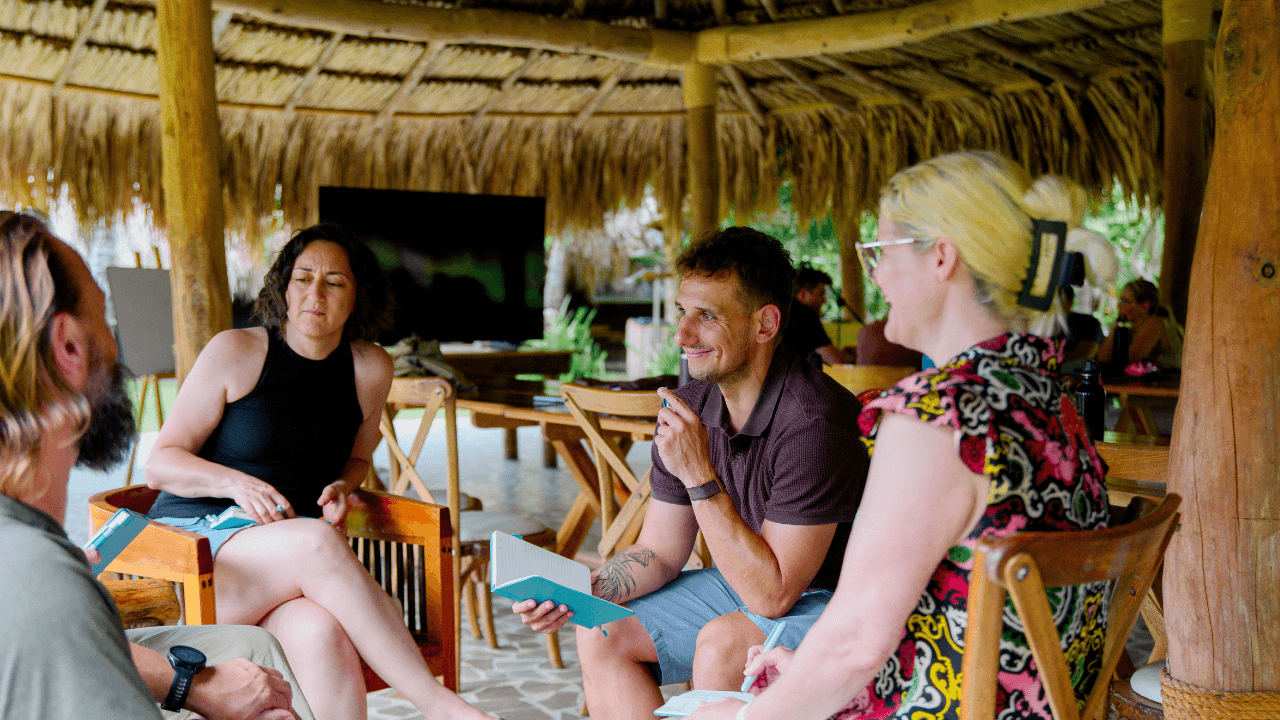
That event happened a year ago, and all of those conclusions are still true.
The problem is what just agreeing with these three words does to most of the people I know - it gives you an immediate comfort.
You nod, you close the tab, and your client delivery stays exactly as it was in 2022.
Our behaviour patterns have permanently changed post-AI, and I've come to believe there's a piece of that equation most experts still aren't aware of.
1/ Human judgement
AI has access to all the tactics and strategies in the world, and will always try to be as useful as possible by quickly proposing whatever in its database matches your pattern the closest.
What it doesn't have is the lived experience, the trials and errors, and the ability to recognise why only ONE out of endless possible options is the right one for the person in front of you.
Just last week I delivered a webinar to a group of nutritionists on this exact topic, and one attendee shared how she now has to justify why she's not suggesting a food protocol mentioned in one obscure research paper found by AI.
Heck, I had a very interesting situation with my co-founder, where he came to me with a fine-tuned Facebook ads strategy created by Claude. For someone with no experience running ads, this was the best plan ever.
It took me 10 seconds to skim through it and notice that the entire plan was built on wrong assumptions, because Claude didn't know key information about the person asking it to create the plan.
Those 10 seconds took years of experience to notice, and it's something AI doesn't have, for now.
The part that bothers me is what actually caused my partner to create this document...
2/ The space in-between
While we still appreciate the latter, we also love the instant gratification that comes with confident answers from our favourite AI.
We were discussing putting paid ads strategy in place, and I just didn't have time that week. He wanted to be proactive and help, so he went to the next best thing. His Claude has partial access to metrics, past results and overall sales strategy, and was more than willing to oblige.

In the space between our weekly sessions.
The latest challenge isn't what happens on calls and sessions with your clients and partners, but what happens between sessions.
When people just don't have the patience to wait, they turn to the next best thing - robots.
So, my question for you becomes very simple:
Why not make sure you cover the space between sessions with the next best thing to your real self?
3/ Can AI model human judgement?
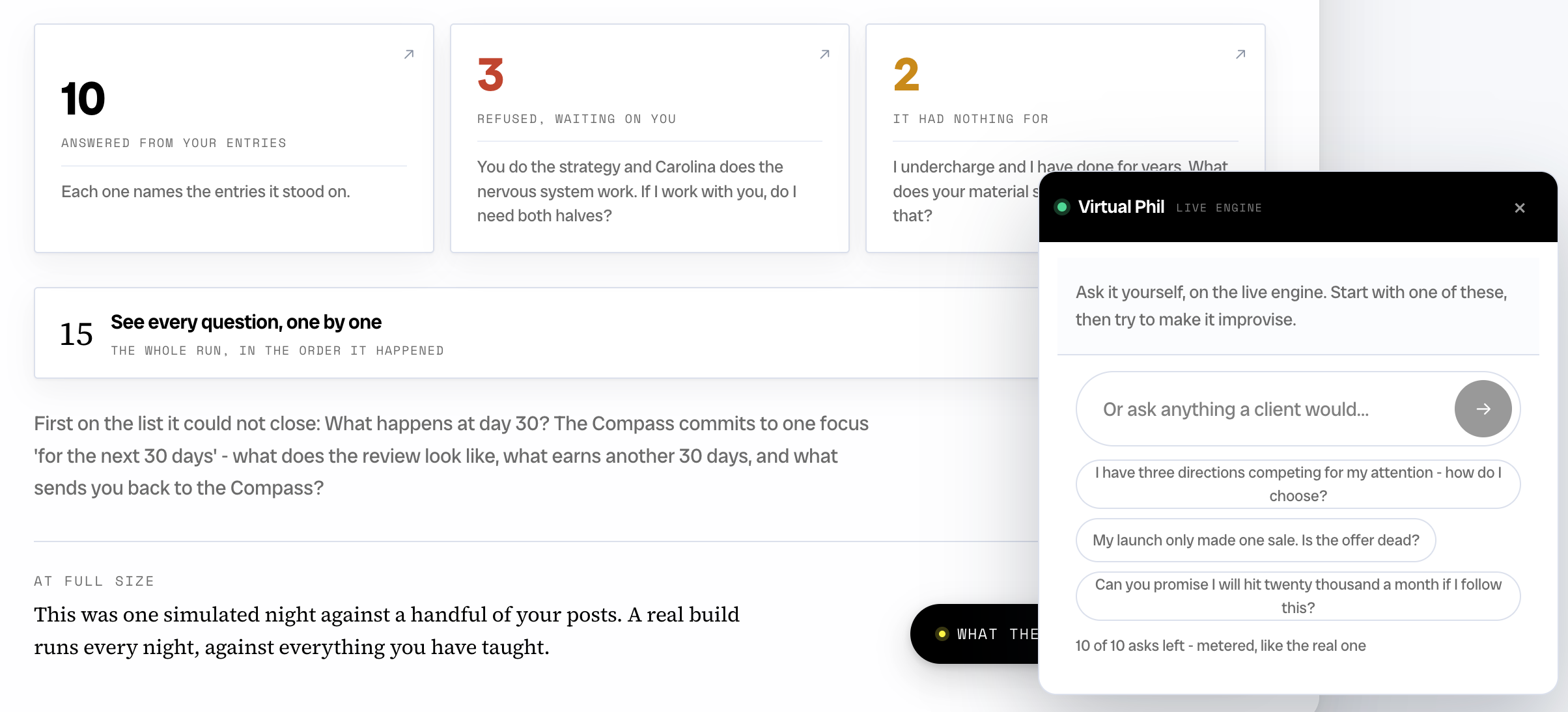
For all the work I've done so far with virtualX (just onboarding the fifth expert who decided to create a virtual version of themselves), I can share that most people I talk to have the same concerns.
The concern isn't about AI replacing them, it's much simpler.
First one is:
"What if Virtual (your name) starts making stuff up? My clients would never trust me again."
And it's funny how we already expect robots to hallucinate, because all of us experience it daily.
But, I can confirm that a custom-built AI can be taught to say "I don't know" if it doesn't have that piece of knowledge from your real brain.
While most clone and twin apps encourage your virtual twins to try and be as helpful as possible, I found out that the exact opposite is what carries more weight and trust.
Which made me think how funny it is that when a real expert says "I don't know" it's often frowned upon, but with a virtual expert the same phrase is not just welcome but proof that it's more human.
Second one is:
"I'm afraid it won't be able to respond the way I do and will sound generic."
The concern is valid, but no one expects it to be you - people know they are chatting with a robot.
But, one of the most important elements of building your virtualX is first figuring out the way you communicate with your clients.
Are you direct? Do you ask follow-up questions? Deliver sharp answers? Or first make them think, with a Socratic approach?
All of that can be fine-tuned, and again - it isn't replacing your judgement, it's making a chat with your virtualX as close as possible to talking to you.
And the final big obstacle is:
"There are certain things only I can do."
YES, and the beauty of a custom AI is that it can be taught boundaries, and ways to turn your client's attention back to you.
That's why my approach will always stay "human led, AI assisted".
Client needs specific feedback that requires your eyes? virtualX will point them to your next call.
Client asks it to help with a clinical case? virtualX will immediately refuse and point them back in your direction.
So the answer to the question in today's title is: YES, with a twist.
Judgement will keep being your advantage. Delivering all of it by hand is what makes it arrive late.

Here's my question for you, and I'd love to read your answer:
Where in your client delivery does your judgement arrive late?
The spot where a client gets stuck, you'd know exactly what to say, and they hear it two days after they needed it.
This is where the "human led, AI assisted" approach makes you really stand out, and it's where I can help.
Let's chat if building your own virtualX makes sense: the details are here, and the form is at the bottom of the page.
Or and let's chat.
-Filip "on time" Sardi

Frequently Asked Questions
Is human judgement still an advantage over AI?
Yes, with a twist. AI has every tactic and strategy in its database and proposes whatever matches your pattern closest. What it lacks is lived experience, the trials and errors, and the ability to see why only one of endless options is right for the person in front of you. Filip skimmed a Claude-built Facebook ads plan in ten seconds and saw it rested on wrong assumptions; those ten seconds took years to earn. Judgement stays the advantage. Delivering all of it by hand is what makes it arrive late.
Why does agreeing that AI can't replace human judgement change nothing?
Because it gives immediate comfort. You nod, close the tab, and your client delivery stays exactly as it was in 2022. Coaches and consultants name the same three words, human judgement, human experience and human connection, and use them as an invincibility armour. The conclusions from a founders' mastermind in Colombia a year ago still hold. What most experts miss is that behaviour patterns changed permanently post-AI, and the change lives in the space between sessions.
What is the space in-between and why does it matter?
The gap between your sessions, where the real challenge now sits. Filip's co-founder built an entire Facebook ads strategy with Claude in the week Filip had no time, because waiting for the weekly session was slower than asking a confident robot. When people lack the patience to wait, they turn to the next best thing. The question that follows is simple: why not cover the space between sessions with the next best thing to your real self?
Can a virtual expert say I don't know instead of making things up?
Yes. A custom-built AI can be taught to say I don't know when the knowledge is not in the expert's real material. Most clone and twin apps push a virtual twin to be as helpful as possible; the opposite carries more weight and trust. It is a strange reversal: a real expert saying I don't know is often frowned upon, while the same words from a virtual expert are welcome and read as proof that it is more human.
What are the three concerns experts raise about a virtual version of themselves?
That it will make things up and cost them their clients' trust; that it will sound generic rather than like them; and that certain things only they can do. In turn: it can be taught to say I don't know; the first step of a virtualX build is mapping how the expert communicates, direct or Socratic, sharp answers or follow-up questions, and fine-tuning to that; and it can be taught boundaries that turn the client's attention back to the expert, pointing a feedback request to the next call and refusing a clinical case outright. Human led, AI assisted.
Client Flow Letter
If this was useful, the next one will be too.
Retention strategy for coaches and founders — every week. No filler.